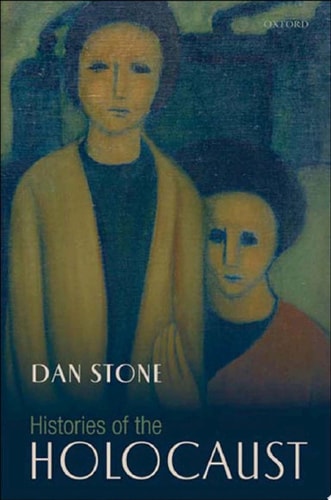
Histories of the Holocaust
0
0
As an Amazon Associate and affiliate partner, Menrva Books earns from qualifying purchases. Learn more
Author Description
The Holocaust is one of the most intensively studied phenomena in modern history. The volume of writing that fuels the numerous debates about it is overwhelming in quantity and diversity. Even those who have dedicated their professional lives to understanding the Holocaust cannot assimilate it all. There is, then, an urgent need to synthesize and evaluate the complex historiography on the Holocaust, exploring the major themes and debates relating to it and drawing widely on the findings of a great deal of research. Concentrating on the work of the last two decades, Histories of the Holocaust examines the 'Final Solution' as a European project, the decision-making process, perpetrator research, plunder and collaboration, regional studies, ghettos, camps, race science, antisemitic ideology, and recent debates concerning modernity, organization theory, colonialism, genocide studies, and cultural history. Research on victims is discussed, but Stone focuses more closely on perpetrators, reflecting trends within the historiography, as well as his own view that in order to understand Nazi genocide the emphasis must be on the culture of the perpetrators. The book is not a 'history of the history of the Holocaust', offering simply a description of developments in historiography. Stone critically analyses the literature, discerning major themes and trends and assessing the achievements and shortcomings of the various approaches. He demonstrates that there never can or should be a single history of the Holocaust and facilitates an understanding of the genocide of the Jews from a multiplicity of angles. An understanding of how the Holocaust could have happened can only be achieved by recourse to histories of the Holocaust: detailed day-by-day accounts of high-level decision-making; long-term narratives of the Holocaust's relationship to European histories of colonialism and warfare; micro-historical studies of Jewish life before, during, and after Nazi occupation; and cultural
Menrva's Summary
THE THESIS
This work investigates how the vast and diverse historiography of the Holocaust can be synthesized to better understand the mechanisms and motivations behind the Nazi genocide. Dan Stone, a professor of modern history and expert in Holocaust studies, evaluates the scholarly output of the last two decades to identify major trends and debates. He argues that a singular narrative is insufficient, proposing instead that a multiplicity of analytical angles is required to comprehend the complexity of the 'Final Solution' as a European project.
THE SCOPE MAP
What You Will Find
- Analysis of perpetrator research and the culture of Nazi ideology
- Examination of decision-making processes, plunder, and collaboration
- Review of regional studies, ghettos, and camp systems
- Discussion of theoretical frameworks including modernity, organization theory, and colonialism
Scope Limits
- The text does not provide a comprehensive history of the Holocaust itself, but rather a critical analysis of the literature written about it.
- While victim experiences are mentioned, the primary focus remains on the perpetrators and the structural conditions of the genocide.
THE AUTHORITY PERSPECTIVE
Scholars and students of history recognize this volume as a vital resource for navigating the overwhelming body of literature produced on the Holocaust. Readers frequently note the academic density of the prose, which serves as a sophisticated guide for those seeking to understand the evolution of historical debate in this field.
Page Count:
344
Publication Date:
2010-01-01
Publisher:
OUP Oxford
ISBN-10:
0191614203
ISBN-13:
9780191614200
History
World War
European History
Historiography
Community Tags
Other Editions(3)


Similar Books





Reader Comments
Share Your Thoughts
No comments yet. Be the first to share your thoughts!