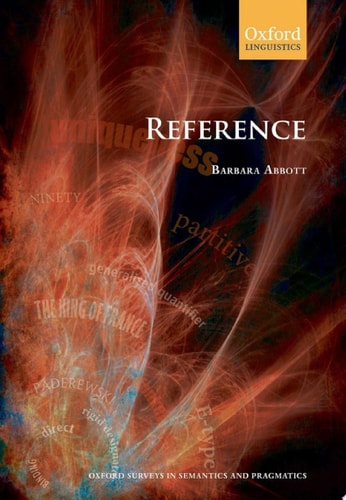
Reference
0
0
As an Amazon Associate and affiliate partner, Menrva Books earns from qualifying purchases. Learn more
Author Description
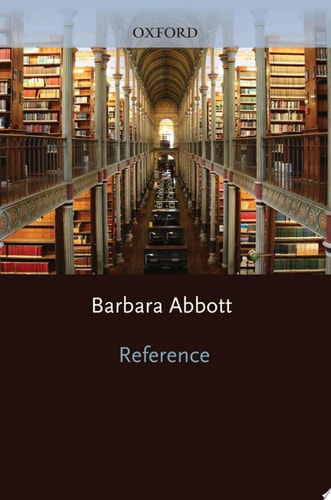
This book introduces the most important problems of reference and considers the solutions that have been proposed to explain them. Reference is at the centre of debate among linguists and philosophers and, as Barbara Abbott shows, this has been the case for centuries. She begins by examining the basic issue of how far reference is a two place (words-world) or a three place (speakers-words-world) relation. She then discusses the main aspects of the field and the issues associated with them, including those concerning proper names; direct reference and individual concepts; the difference between referential and quantificational descriptions; pronouns and indexicality; concepts like definiteness and strength; and noun phrases in discourse. Professor Abbott writes with exceptional verve and wit. She presupposes no technical knowledge or background and presents issues and analyses from first principles, illustrating them at every stage with well-chosen examples. Her book is addressed in the first place to advanced undergraduate and graduate students in linguistics and philosophy of language, but it will also appeal to students and practitioners in computational linguistics, cognitive psychology, and anthropology. All will welcome the clarity this guide brings to a subject that continues to challenge the leading thinkers of the age.
Menrva's Summary
THE THESIS
This book investigates the fundamental problems of reference and evaluates the various theoretical solutions proposed by linguists and philosophers. Barbara Abbott, a professor in the field, utilizes a structured approach to examine how language connects to the world. She argues that reference functions as a complex interaction between speakers, words, and the world, rather than a simple binary relationship, providing a framework that builds from first principles to complex linguistic phenomena.
THE SCOPE MAP
What You Will Find
- Analysis of proper names, indexicality, and pronouns
- Examination of referential versus quantificational descriptions
- Discussion of definiteness, strength, and noun phrases in discourse
- Theoretical exploration of the two-place versus three-place relation of reference
Scope Limits
- Does not assume prior technical knowledge in semantics or pragmatics
- Focuses primarily on linguistic and philosophical perspectives rather than purely computational implementations
THE AUTHORITY PERSPECTIVE
Readers frequently note the accessibility of the prose, which manages to explain complex theoretical debates without requiring extensive background knowledge. Experts highlight this as a foundational text for students and practitioners across linguistics, philosophy, and cognitive science.
Page Count:
323
Publication Date:
2010-01-01
Publisher:
OUP Oxford
ISBN-10:
0191613517
ISBN-13:
9780191613517
Philosophy of
Linguistics
English
Semantics
Pragmatics
English & College Success
Reference