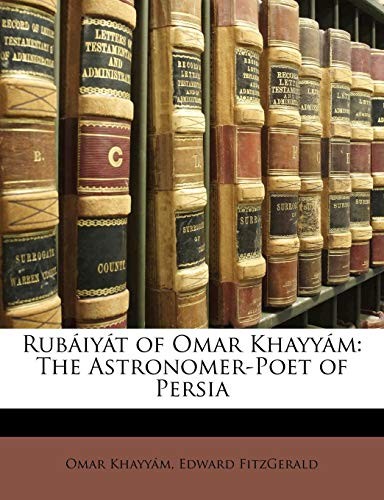
Rubáiyát of Omar Khayyám: The Astronomer-Poet of Persia
0
0
As an Amazon Associate and affiliate partner, Menrva Books earns from qualifying purchases. Learn more
Author Description
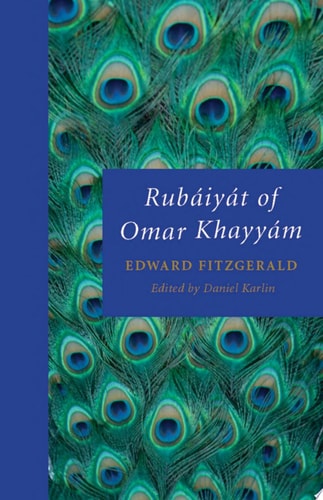
'The Moving Finger writes; and, having writ Moves on: nor all thy Piety nor Wit Shall lure it back to cancel half a line Nor all thy tears wash out a word of it.' In the 'rubáiyát' (short epigrammatic poems) of the medieval Persian poet, mathematician, and philosopher Omar Khayyám, Edward FitzGerald saw an unflinching challenge to the illusions and consolations of mankind in every age. His version of Omar is neither a translation nor an independent poem; sceptical of divine providence and insistent on the pleasure of the passing moment, its 'Orientalism' offers FitzGerald a powerful and distinctive voice, in whose accents a whole Victorian generation comes to life. Although the poem's vision is bleak, it is conveyed in some of the most beautiful and haunting images in English poetry - and some of the sharpest- edged. The poem sold no copies at all on its first appearance in 1859, yet when it was 'discovered' two years later its first admirers included Dante Gabriel Rossetti, Swinburne, and Ruskin. Daniel Karlin's richly annotated edition does justice to the scope and complexity of FitzGerald's lyrical meditation on 'human death and fate'. ABOUT THE SERIES: For over 100 years Oxford World's Classics has made available the widest range of literature from around the globe. Each affordable volume reflects Oxford's commitment to scholarship, providing the most accurate text plus a wealth of other valuable features, including expert introductions by leading authorities, helpful notes to clarify the text, up-to-date bibliographies for further study, and much more.
Menrva's Summary
THE PULSE
The Rubáiyát presents a series of quatrains that confront the inevitability of death and the fleeting nature of human existence. The speaker navigates a world defined by the tension between religious dogma and the pursuit of earthly pleasure, ultimately advocating for the enjoyment of the present moment. Through a series of lyrical meditations, the text explores the limitations of human knowledge and the indifference of the universe. The narrative framework relies on a sequence of independent yet thematically linked verses that build a cohesive philosophical argument regarding fate and mortality.
INSIDE THE PAGES
- Epigrammatic quatrain structure
- Philosophical inquiry into divine providence
- Imagery centered on wine, gardens, and the passage of time
- Skeptical tone regarding human piety
- Exploration of fatalism and existential uncertainty
- Lyrical adaptation of medieval Persian themes
- Victorian-era stylistic sensibilities
- Focus on the transience of life
THE COLLECTIVE ECHO
Readers frequently highlight the haunting beauty of the imagery and the sharp, cynical wit embedded within the verses. Discussion often centers on the unique blend of Persian mysticism and Victorian skepticism that defines FitzGerald's adaptation. Critics note that the work serves as a significant cultural artifact, reflecting the anxieties of its time while maintaining a timeless appeal. The pacing is deliberate, allowing for reflection on each individual stanza, which contributes to the overall meditative atmosphere of the collection. Many readers appreciate the balance between the bleak outlook on fate and the vibrant, sensory descriptions of life's transient pleasures.
Page Count:
237
Publication Date:
2010-01-01
Publisher:
OUP Oxford
ISBN-10:
0191614785
ISBN-13:
9780191614781
Philosophy
Poetry
English
Classic Literature
English & College Success
Victorian