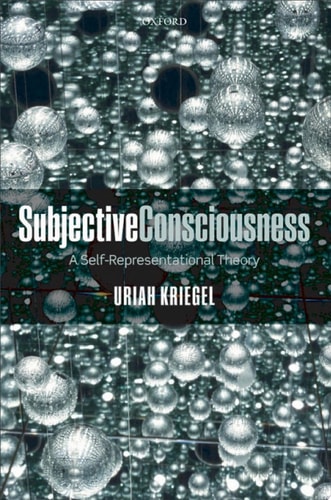
Subjective Consciousness: A Self-Representational Theory
0
0
As an Amazon Associate and affiliate partner, Menrva Books earns from qualifying purchases. Learn more
Author Description
Some mental events are conscious, some are unconscious. What is the difference between the two? Uriah Kriegel offers the following answer: whatever else they may represent, conscious mental states always represent themselves (whereas unconscious ones do not, at least not in the right way). The book develops this 'self-representational' approach to consciousness along several dimensions - including phenomenological, ontological, and scientific - and defends it from common and uncommon criticisms.
Menrva's Summary
THE THESIS
This book investigates the fundamental distinction between conscious and unconscious mental states by proposing that consciousness is defined by self-representation. Uriah Kriegel, a philosopher specializing in the philosophy of mind, constructs a theoretical framework arguing that conscious mental states possess the unique property of representing themselves. He supports this thesis by integrating phenomenological analysis with ontological considerations and empirical findings from cognitive science, while systematically addressing potential objections to the theory.
THE SCOPE MAP
What You Will Find
- A detailed articulation of the self-representational theory of consciousness
- Analysis of the phenomenological structure of subjective experience
- Ontological arguments regarding the nature of mental states
- Engagement with contemporary scientific models of cognition
Scope Limits
- The text does not provide a comprehensive history of all theories of consciousness
- It does not offer a clinical or medical guide for treating disorders of consciousness
THE AUTHORITY PERSPECTIVE
Experts in the philosophy of mind recognize this work as a significant contribution to the debate on the nature of subjective experience. Readers frequently note the academic density of the prose, which requires a strong background in analytic philosophy to fully grasp the nuances of the arguments presented.
Page Count:
342
Publication Date:
2009-01-01
Publisher:
OUP Oxford
ISBN-10:
0191610054
ISBN-13:
9780191610059
Philosophy
Mind & Body
Metaphysics
Consciousness
Philosophy of
Community Tags
Similar Books