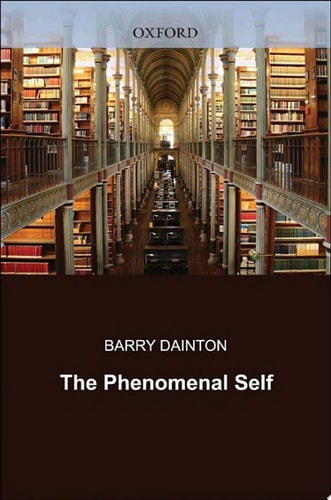
The Phenomenal Self
0
0
As an Amazon Associate and affiliate partner, Menrva Books earns from qualifying purchases. Learn more
Author Description
Barry Dainton presents a fascinating new account of the self, the key to which is experiential or phenomenal continuity. Provided our mental life continues we can easily imagine ourselves surviving the most dramatic physical alterations, or even moving from one body to another. It was this fact that led John Locke to conclude that a credible account of our persistence conditions - an account which reflects how we actually conceive of ourselves - should be framed in terms of mental rather than material continuity. But mental continuity comes in different forms. Most of Locke's contemporary followers agree that our continued existence is secured by psychological continuity, which they take to be made up of memories, beliefs, intentions, personality traits, and the like. Dainton argues that that a better and more believable account can be framed in terms of the sort of continuity we find in our streams of consciousness from moment to moment. Why? Simply because provided this continuity is not lost - provided our streams of consciousness flow on - we can easily imagine ourselves surviving the most dramatic psychological alterations. Phenomenal continuity seems to provide a more reliable guide to our persistence than any form of continuity. The Phenomenal Self is a full-scale defence and elaboration of this premise. The first task is arriving at an adequate understanding of phenomenal unity and continuity. This achieved, Dainton turns to the most pressing problem facing any experience-based approach: losses of consciousness. How can we survive them? He shows how the problem can be solved in a satisfactory manner by construing ourselves as systems of experiential capacities. He then moves on to explore a range of further issues. How simple can a self be? How are we related to our bodies? Is our persistence an all-or-nothing affair? Do our minds consist of parts which could enjoy an independent existence? Is it metaphysically intelligible to construe ourselves as systems o
Menrva's Summary
THE THESIS
Does the persistence of the self depend on psychological traits, or is it fundamentally rooted in the continuity of phenomenal experience? Barry Dainton, a philosopher specializing in the philosophy of mind, challenges the traditional Lockean focus on psychological continuity—such as memory and personality—by proposing that the self is best understood through the continuous flow of consciousness. He argues that even when psychological states change drastically, the underlying stream of experience provides a more robust and intuitive basis for personal identity.
THE SCOPE MAP
What You Will Find
- A detailed analysis of phenomenal unity and the nature of consciousness.
- A proposed framework for understanding the self as a system of experiential capacities.
- Philosophical arguments addressing the problem of gaps in consciousness and the relationship between mind and body.
Scope Limits
- The text does not provide a biological or neuroscientific account of the brain.
- It does not address sociological or cultural constructions of identity.
THE AUTHORITY PERSPECTIVE
Experts in the field of analytic philosophy recognize this work as a significant contribution to the debate on personal identity and the nature of the self. Readers frequently note the academic density of the prose, which requires a strong background in metaphysical inquiry to fully appreciate the author's arguments.
Page Count:
462
Publication Date:
2008-01-01
Publisher:
OUP Oxford
ISBN-10:
0191608750
ISBN-13:
9780191608759
Philosophy
Mind & Body
Philosophy of
Metaphysics
Consciousness
Personal Identity
Community Tags
Other Editions(3)
Similar Books

Reader Comments
Share Your Thoughts
No comments yet. Be the first to share your thoughts!