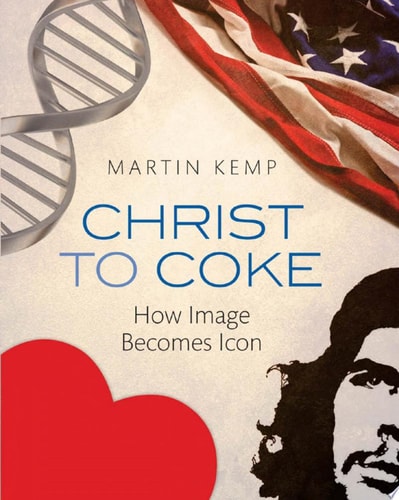
Christ to Coke
0
0
As an Amazon Associate and affiliate partner, Menrva Books earns from qualifying purchases. Learn more
Author Description
Image, Branding, And Logos Are Obsessions Of Our Age. Iconic Images Dominate The Media. Christ To Coke Is The First Book To Look At All The Main Types Of Visual Icons. It Does So Via Eleven Supreme And Mega-famous Examples, Both Historical And Contemporary, To See How They Arose And How They Continue To Function. Along The Way, We Encounter The Often Weird And Wonderful Ways That They Become Transformed In An Astonishing Variety Of Ways And Contexts. How, For Example, Has The Communist Revolutionary Che Become A Romantic Hero For Middle-class Teenagers? The Stock Image Of Christ's Face Is The Founding Icon - Literally, Since He Was The Central Subject Of Early Icon Painting. Some Of The Icons That Follow Are General, Like The Cross, The Lion, And The Heart-shape. Some Are Specific, Such As The Mona Lisa, Che Guevara, And The Famous Photograph Of The Napalmed Girl In Vietnam. The American Flag, The Stars And Stripes, Does Not Quite Fit Into Either Category. Modern Icons Come From Commerce, Led By The Coca-cola Bottle, And From Science, Most Notably The Double Helix Of Dna And Einstein's Famous Equation E=mc2. The Stories, Researched Using The Skills Of A Leading Visual Historian, Are Told In A Vivid And Personal Manner. Some Are Funny; Some Are Deeply Moving; Some Are Highly Improbable; Some Centre On Popular Fame; Others Are Based On The Most Profound Ideas In Science. The Diversity Is Extraordinary. There Is No Set Formula, But Do The Images Share Anything In Common? So Famous Are The Images That Every Reader Is An Expert In Their Own Right And Will Be Entertained And Challenged By The Narratives That Martin Kemp Skilfully Weaves Around Them.
Menrva's Summary
THE THESIS
This book investigates the mechanisms by which specific visual images achieve iconic status and maintain their cultural resonance over time. Martin Kemp, a distinguished visual historian, utilizes a case-study approach to examine eleven distinct images, ranging from religious symbols to scientific diagrams and commercial logos. By analyzing the origins and subsequent transformations of these icons, the author argues that their power lies in their adaptability and the diverse ways they are reinterpreted across different historical and social contexts.
THE SCOPE MAP
What You Will Find
- Analysis of eleven iconic images including the face of Christ, the Mona Lisa, Che Guevara, and the Coca-Cola bottle.
- Examination of scientific icons such as the DNA double helix and Einstein's E=mc2 equation.
- Exploration of how symbols like the cross, the lion, and the heart-shape evolve in public consciousness.
- Historical and sociological context for the proliferation of branding and visual media.
Scope Limits
- The book does not provide an exhaustive catalog of all global icons, focusing instead on a curated selection of eleven specific examples.
- It does not offer a singular, unified theory of iconicity, acknowledging that these images function through varied and often unpredictable mechanisms.
THE AUTHORITY PERSPECTIVE
Experts and readers alike note that Kemp’s background as a leading visual historian provides a rigorous yet accessible framework for understanding complex cultural phenomena. The text is frequently cited for its ability to bridge the gap between academic art history and popular interest in media and branding.
Page Count:
392
Publication Date:
2011-01-01
Publisher:
Oup Oxford
ISBN-10:
0191617040
ISBN-13:
9780191617041
History
Art History
Visual Culture
Media Studies
Sociology
Community Tags
Similar Books