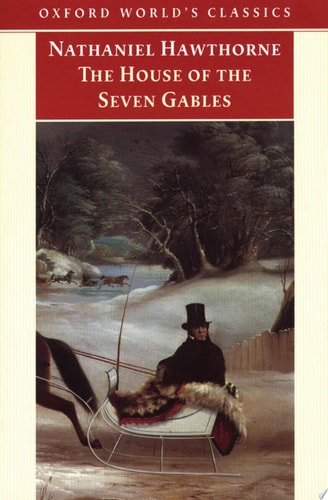
The House of the Seven Gables
0
0
As an Amazon Associate and affiliate partner, Menrva Books earns from qualifying purchases. Learn more
Author Description
In the final years of the seventeenth century in a small New England town, the venerable Colonel Pyncheon decides to erect a ponderously oak-framed and spacious family mansion. It occupies the spot where Matthew Maule, `an obscure man', had lived in a log hut, until his execution for witchcraft. From the scaffold, Maule points his finger at the presiding Colonel and cries `God will give him blood to drink!' The fate of Colonel Pyncheon exerts a heavy influence on his descendants in the crumbling mansion for the next century and a half. Hawthorne called his novel a `Romance', drawing on the Gothic tradition which embraced and exploited the thrills of the supernatural. Unlike The Scarlet Letter, with its unrelentingly dark view of human nature and guilt, Hawthorne sought to write `a more natural and healthy product of my mind', a story which would show guilt to be a trick of the imagination. The tension between fantasy and a new realism underpins the novel's descriptive virtuosity. ABOUT THE SERIES: For over 100 years Oxford World's Classics has made available the widest range of literature from around the globe. Each affordable volume reflects Oxford's commitment to scholarship, providing the most accurate text plus a wealth of other valuable features, including expert introductions by leading authorities, helpful notes to clarify the text, up-to-date bibliographies for further study, and much more.
Menrva's Summary
THE PULSE
A multi-generational curse initiated by a wrongful execution haunts the Pyncheon family and their decaying New England mansion. The story follows the descendants of Colonel Pyncheon as they grapple with the weight of ancestral guilt and the lingering influence of a man condemned for witchcraft. The narrative operates through a blend of Gothic atmosphere and social realism, tracking the characters' attempts to reconcile their present circumstances with the dark history embedded in their home. Hawthorne employs a third-person omniscient perspective to examine the psychological toll of inherited sin and the shifting social landscape of nineteenth-century America.
INSIDE THE PAGES
- Exploration of inherited guilt and ancestral trauma
- Integration of Gothic supernatural elements with domestic realism
- Detailed architectural symbolism of the Pyncheon mansion
- Examination of the decline of aristocratic families
- Contrast between past superstition and modern progress
- Use of the curse as a catalyst for character development
- Focus on the tension between individual agency and historical legacy
- Atmospheric descriptions of the New England setting
THE COLLECTIVE ECHO
Discussion often centers on the novel's unique position as a bridge between the dark, psychological intensity of Hawthorne's earlier work and a more optimistic view of human nature. Readers frequently highlight the effectiveness of the mansion itself as a central character that mirrors the decay and stagnation of the Pyncheon lineage. Critics often analyze the balance between the supernatural elements of the Maule curse and the grounded, realistic portrayal of the characters' daily lives. The prose is noted for its descriptive density, which serves to immerse the reader in the specific atmosphere of the setting while exploring complex thematic threads regarding the influence of the past on the present.
Page Count:
368
Publication Date:
1998-01-01
Publisher:
OUP Oxford
ISBN-10:
0191611182
ISBN-13:
9780191611186
Romance
Gothic
Historical
classic
English
Literary
New England
English & College Success
Community Tags
Similar Books