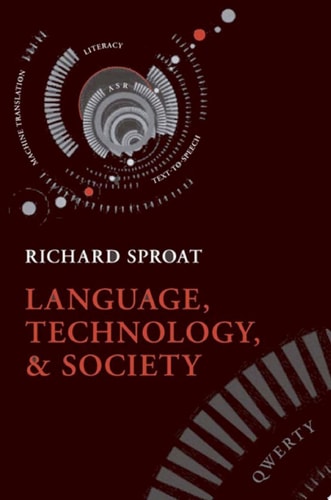
Language, Technology, and Society
0
0
As an Amazon Associate and affiliate partner, Menrva Books earns from qualifying purchases. Learn more
Author Description
This book traces the history of language technology from writing - the first technology specifically designed for language - to digital speech and other contemporary language systems. The book describes the social impact of technological developments over five millennia, and addresses topics such as the ways in which literacy has influenced cognitive and scientific development; the social impact of modern speech technology; the influence of various printing technologies; the uses and limitations of machine translation; how far mass information access is a means for exploitation or enlightenment; the deciphering of ancient scripts; and technical aids for people with language disabilities. Richard Sproat writes in a clear, readable style, introducing linguistic and other scientific concepts as they are needed. His book offers fascinating reading for everyone interested in how language and technology have shaped and continue to shape our day-to-day lives.
Menrva's Summary
THE THESIS
This book investigates the historical and social co-evolution of human language and the technologies designed to record, transmit, and process it. Richard Sproat, a researcher in computational linguistics, utilizes a broad historical framework to examine how the invention of writing, printing, and digital speech systems have fundamentally altered human cognition and social structures. He argues that technological advancements in language are not merely neutral tools but are active agents that shape scientific development, information access, and social equity.
THE SCOPE MAP
What You Will Find
- A historical survey spanning five millennia of language technology.
- Analysis of the cognitive impacts of literacy and printing.
- Technical overviews of machine translation and speech synthesis.
- Case studies on the deciphering of ancient scripts and assistive technologies.
Scope Limits
- The text does not provide an exhaustive technical manual for modern software development.
- It does not focus on the biological evolution of human language capacity, but rather on external technological extensions.
THE AUTHORITY PERSPECTIVE
Experts and readers frequently note the book's ability to synthesize complex linguistic and technical concepts into a highly accessible narrative. It is widely regarded as a foundational text for those seeking to understand the intersection of communication history and modern digital systems.
Page Count:
301
Publication Date:
2010-01-01
Publisher:
OUP Oxford
ISBN-10:
0191613924
ISBN-13:
9780191613920
Computational linguistics
English & College Success
Sociology
Communication Studies
Linguistics
Science History
English
Technology
Community Tags
Other Editions(3)

Similar Books