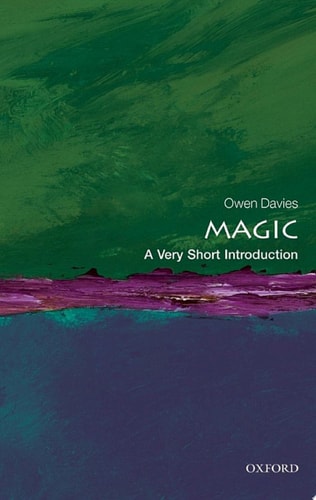
Magic: A Very Short Introduction
0
0
As an Amazon Associate and affiliate partner, Menrva Books earns from qualifying purchases. Learn more
Author Description
Defining 'magic' is a maddening task. Over the last century numerous philosophers, anthropologists, historians, and theologians have attempted to pin down its essential meaning, sometimes analysing it in such complex and abstruse depth that it all but loses its sense altogether. For this reason, many people often shy away from providing a detailed definition, assuming it is generally understood as the human control of supernatural forces. 'Magic' continues to pervade the popular imagination and idiom. People feel comfortable with its contemporary multiple meanings, unaware of the controversy, conflict, and debate its definition has caused over two and a half millennia. In common usage today 'magic' is uttered in reference to the supernatural, superstition, illusion, trickery, religious miracles, fantasies, and as a simple superlative. The literary confection known as 'magical realism' has considerable appeal and many modern scientists have ironically incorporated the word into their vocabulary, with their 'magic acid', 'magic bullets' and 'magic angles'. Since the so-called European Enlightenment magic has often been seen as a marker of primitivism, of a benighted earlier stage of human development. Yet across the modern globalized world hundreds of millions continue to resort to magic - and also to fear it. Magic provides explanations and remedies for those living in extreme poverty and without access to alternatives. In the industrial West, with its state welfare systems, religious fundamentalists decry the continued moral threat posed by magic. Under the guise of neo-Paganism, its practice has become a religion in itself. Magic continues to be a truly global issue. This Very Short Introduction does not attempt to provide a concluding definition of magic: it is beyond simple definition. Instead it explores the many ways in which magic, as an idea and a practice, has been understood and employed over the millennia. ABOUT THE SERIES: The Very Short Introductions ser
Menrva's Summary
THE THESIS
This book investigates the persistent difficulty of defining 'magic' by examining its multifaceted roles in human history, belief systems, and contemporary society. Professor Owen Davies, a historian specializing in the history of magic and witchcraft, utilizes a broad historical and cross-cultural framework to argue that magic is not a static concept but a fluid idea that shifts in meaning depending on the cultural, religious, and scientific context of the era. By analyzing how societies from antiquity to the modern day have categorized and utilized supernatural concepts, the author demonstrates why a singular, universal definition remains elusive.
THE SCOPE MAP
What You Will Find
- Historical analysis of magic from the Enlightenment to the present day.
- Examination of magic as a tool for social, religious, and scientific discourse.
- Comparative study of how magic functions in both impoverished regions and modern industrial societies.
Scope Limits
- The text does not provide a definitive, singular academic definition of magic.
- It does not serve as a practical guide for the performance of magical rituals or occult practices.
THE AUTHORITY PERSPECTIVE
Experts and readers alike recognize this work as a concise, accessible entry point into the complex historiography of magic. The text is frequently praised for its ability to distill dense anthropological and historical debates into a readable format suitable for students and general readers.
Page Count:
153
Publication Date:
2012-01-01
Publisher:
OUP Oxford
ISBN-10:
0191623881
ISBN-13:
9780191623882
History
Philosophy
Religion
Sociology
Anthropology
Magic history
Special Topics
Community Tags
Similar Books