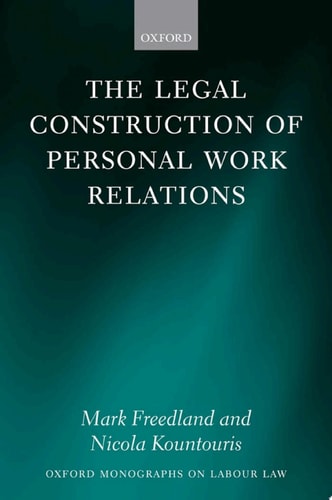
The Legal Construction of Personal Work Relations
0
0
As an Amazon Associate and affiliate partner, Menrva Books earns from qualifying purchases. Learn more
Author Description
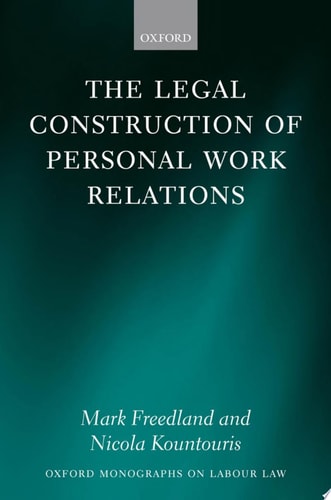
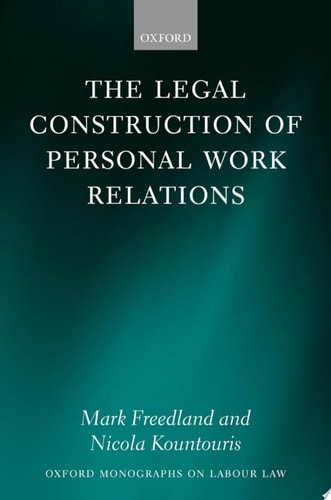
This Book Explores The Conceptual Framework Of European Employment Law, Focusing On Understanding The Law's Construction Of Employment Relationships. The Book Draws On Extensive Comparative Research Of The Legal Architecture Of Employment Relations In National Legal Systems And Eu Law To Analyse The Traditional Model Of The Contract Of Employment And The Difficulties Of Using The Traditional Model To Frame Modern Working Relationships. The Authors Then Present A New Model Of The Foundations Of Employment Relationships, Based On The Concept Of A Personal Work Nexus, And Explore The Potential Of Their Model To Shape The Future Development Of Employment Law. Throughout The Book, The Authors Analyse The Interaction Of Domestic And Eu Employment Law, And Discuss The Possibility Of Future Legal Harmonisation In The Area. They Conclude By Exploring The Potential For A Common Framework For European Employment Law, In The Context Of Broader Debates Surrounding The Harmonisation Of European Private Law.
Menrva's Summary
THE THESIS
This book investigates the conceptual limitations of the traditional contract of employment within European legal systems and proposes a new framework based on the personal work nexus. Mark Freedland and Nicola Kountouris, both established scholars in labor law, utilize extensive comparative research to evaluate how national and EU legal systems categorize working relationships. They argue that the traditional model is increasingly inadequate for modern labor markets and offer a theoretical alternative to guide future legislative development.
THE SCOPE MAP
What You Will Find
- Comparative analysis of employment law across various national legal systems.
- A proposed model of the personal work nexus as a foundation for employment law.
- Examination of the interaction between domestic and European Union legal frameworks.
Scope Limits
- The text focuses primarily on European jurisdictions and does not provide a global comparative analysis.
- The book prioritizes theoretical and conceptual legal architecture over practical litigation strategy or human resources management.
THE AUTHORITY PERSPECTIVE
Legal scholars and practitioners frequently cite this work as a significant contribution to the academic discourse on the modernization of labor law. Experts highlight the text for its rigorous analytical approach to the complexities of European private law and its influence on debates regarding legal harmonization.
Page Count:
501
Publication Date:
2011-01-01
Publisher:
Oup Oxford
ISBN-10:
0191622117
ISBN-13:
9780191622113
Law
Employment Law
European Law
Labor Relations
Legal Theory
Community Tags
Other Editions(3)
Similar Books