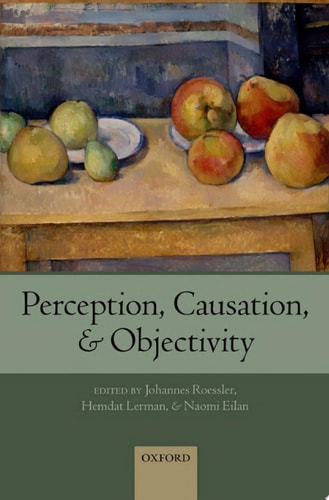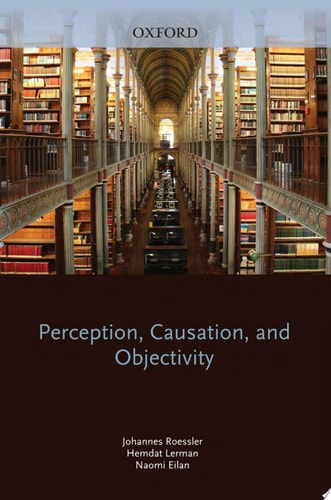
Perception, Causation, and Objectivity
0
0
As an Amazon Associate and affiliate partner, Menrva Books earns from qualifying purchases. Learn more
Author Description
To Be A 'commonsense Realist' Is To Hold That Perceptual Experience Is (in General) An Immediate Awareness Of Mind-independent Objects, And A Source Of Direct Knowledge Of What Such Objects Are Like. Over The Past Few Centuries This View Has Faced Formidable Challenges From Epistemology, Metaphysics, And, More Recently, Cognitive Science. However, In Recent Years There Has Been Renewed Interest In It, Due To New Work On Perceptual Consciousness, Objectivity, And Causal Understanding. This Volume Collects Nineteen Original Essays By Leading Philosophers And Psychologists On These Topics. Questions Addressed Include: What Are The Commitments Of Commonsense Realism? Does It Entail Any Particular View Of The Nature Of Perceptual Experience, Or Any Particular View Of The Epistemology Of Perceptual Knowledge? Should We Think Of Commonsense Realism As A View Held By Some Philosophers, Or Is There A Sense In Which We Are Pre-theoretically Committed To Commonsense Realism In Virtue Of The Experience We Enjoy Or The Concepts We Use Or The Explanations We Give? Is Commonsense Realism Defensible, And If So How, In The Face Of The Formidable Criticism It Faces? Specific Issues Addressed In The Philosophical Essays Include The Status Of Causal Requirements On Perception, The Causal Role Of Perceptual Experience, And The Relation Between Objective Perception And Causal Thinking. The Scientific Essays Present A Range Of Perspectives On The Development, Phylogenetic And Ontogenetic, Of The Human Adult Conception Of Perception.
Menrva's Summary
THE THESIS
This volume investigates the viability of commonsense realism—the view that perceptual experience provides immediate awareness of mind-independent objects—in the context of contemporary challenges from epistemology, metaphysics, and cognitive science. The editors, Hemdat Lerman, Johannes Roessler, and Naomi Eilan, curate nineteen original essays from prominent philosophers and psychologists to evaluate whether this perspective remains defensible. The text examines the conceptual commitments of realism and explores whether humans are pre-theoretically inclined toward this view through their cognitive and perceptual faculties.
THE SCOPE MAP
What You Will Find
- Analysis of the causal requirements and roles within perceptual experience
- Discussions on the relationship between objective perception and causal thinking
- Phylogenetic and ontogenetic perspectives on the development of human perceptual concepts
- Philosophical inquiries into the nature of perceptual knowledge
Scope Limits
- The text does not provide a singular, unified theory of perception but rather a collection of diverse, often competing academic viewpoints
- It does not offer a comprehensive history of realism, focusing instead on contemporary debates and recent developments
THE AUTHORITY PERSPECTIVE
Experts identify this collection as a rigorous contribution to the philosophy of perception, suitable for advanced students and researchers in the field. Readers frequently note the academic density of the prose, which assumes a high level of familiarity with current debates in epistemology and cognitive science.
Page Count:
384
Publication Date:
2011-01-01
Publisher:
Oxford University Press
ISBN-10:
0191621315
ISBN-13:
9780191621314
Psychology
Philosophy
Objectivity
Epistemology
Metaphysics
Causation
Perception