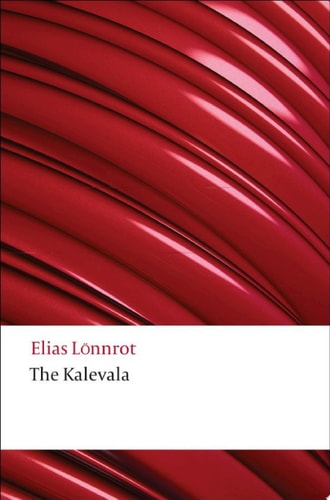
The Kalevala: An Epic Poem after Oral Tradition
0
0
As an Amazon Associate and affiliate partner, Menrva Books earns from qualifying purchases. Learn more
Author Description
The Kalevala is the great Finnish epic, which like the Iliad and the Odyssey, grew out of a rich oral tradition with prehistoric roots. During the first millenium of our era, speakers of Uralic languages (those outside the Indo-European group) who had settled in the Baltic region of Karelia, that straddles the border of eastern Finland and north-west Russia, developed an oral poetry that was to last into the nineteenth century. This poetry provided the basis of the Kalevala. It was assembled in the 1840s by the Finnish scholar Elias Lönnrot, who took `dictation' from the performance of a folk singer, in much the same way as our great collections from the past, from Homeric poems to medieval songs and epics, have probably been set down. Published in 1849, it played a central role in the march towards Finnish independence and inspired some of Sibelius's greatest works. This new and exciting translation by poet Keith Bosley, prize-winning translator of the anthology Finnish Folk Poetry: Epic, is the first truly to combine liveliness with accuracy in a way which reflects the richness of the original. ABOUT THE SERIES: For over 100 years Oxford World's Classics has made available the widest range of literature from around the globe. Each affordable volume reflects Oxford's commitment to scholarship, providing the most accurate text plus a wealth of other valuable features, including expert introductions by leading authorities, helpful notes to clarify the text, up-to-date bibliographies for further study, and much more.
Menrva's Summary
THE PULSE
The central conflict involves the struggle between the peoples of Kalevala and Pohjola, driven by the quest for the magical Sampo and the pursuit of power, wisdom, and marriage. The narrative follows various heroes, most notably the eternal sage Väinämöinen, as they navigate a world governed by song, incantation, and the whims of ancient deities. The text is structured as a series of interconnected poems that blend mythological creation stories with human-scale dramas of rivalry and romance. The framework relies on the rhythmic, alliterative style characteristic of Finnish oral tradition, capturing the cadence of folk performance.
INSIDE THE PAGES
- Use of trochaic tetrameter to mimic the original oral meter
- Extensive focus on the power of song and spoken word as a magical force
- Integration of creation myths and shamanistic rituals
- Episodic structure reflecting the compilation of disparate folk songs
- Themes of rivalry between the light of Kalevala and the darkness of Pohjola
- Detailed descriptions of forging, smithing, and agricultural life
- Inclusion of lyrical passages alongside heroic action
- Emphasis on the role of the sage as a mediator between the human and spirit realms
THE COLLECTIVE ECHO
Readers and critics frequently note the unique rhythmic quality of this translation, which successfully preserves the distinct musicality of the Finnish original. Discussion often centers on the work's historical significance as a foundational text for Finnish national identity and its influence on later artistic movements. Many highlight the accessibility of this specific edition, noting that the scholarly apparatus provides necessary context for those unfamiliar with Uralic mythology. The balance between the fantastical elements of the epic and the grounded, earthy nature of the folk characters remains a primary point of interest for students and enthusiasts alike. This volume is widely regarded as a standard entry point for those seeking to understand the roots of Baltic folklore.
Page Count:
735
Publication Date:
2008-01-01
Publisher:
OUP Oxford
ISBN-10:
0191637726
ISBN-13:
9780191637728
English
Classic Literature
Epic Poetry
Finnish Literature
Mythology
Oral Tradition
English & College Success
Folklore