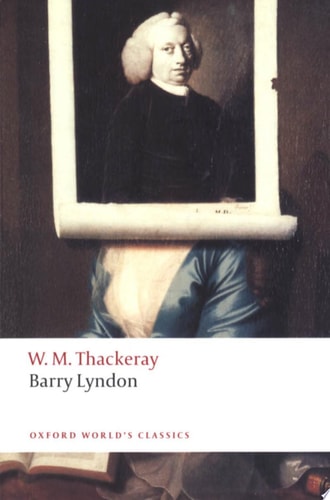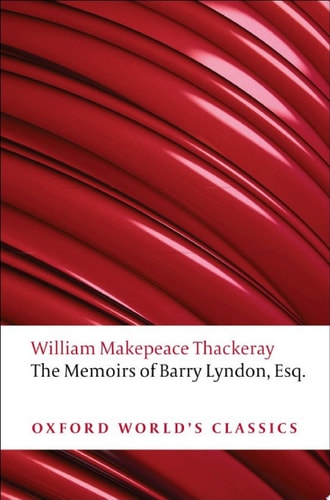
Barry Lyndon
0
0
As an Amazon Associate and affiliate partner, Menrva Books earns from qualifying purchases. Learn more
Author Description
Set in the second half of the eighteenth century, Barry Lyndon is the fictional autobiography of an adventurer and rogue whom the reader is led to distrust from the very beginning. Born into the petty Irish gentry, and outmanoeuvred in his first love-affair, a ruined Barry joins the British army. After service in Germany he deserts and, after a brief spell as a spy, pursues the career of a gambler in the dissolute clubs and courts of Europe. In a determined effort to enter fashionable society he marries a titled heiress but finds he has met his match. First published in 1844, Barry Lyndon is Thackeray's earliest substantial novel and in some ways his most original, reflecting his views of the true art of fiction: to represent a subject, however unpleasant, with accuracy and wit, and not to moralize. The text is that of George Sainsbury's 1908 Oxford edition which restores passages cut when the novel was revised in 1856. ABOUT THE SERIES: For over 100 years Oxford World's Classics has made available the widest range of literature from around the globe. Each affordable volume reflects Oxford's commitment to scholarship, providing the most accurate text plus a wealth of other valuable features, including expert introductions by leading authorities, helpful notes to clarify the text, up-to-date bibliographies for further study, and much more.
Menrva's Summary
THE PULSE
Redmond Barry, a cunning and opportunistic Irishman, navigates the social and military hierarchies of eighteenth-century Europe to secure wealth and status. Driven by an insatiable desire for aristocratic standing, Barry maneuvers through the British army, espionage, and professional gambling circuits. His path is obstructed by his own lack of moral compass, the rigid class structures of the era, and the eventual consequences of his manipulative marriage to a titled heiress. The narrative is presented as a first-person autobiography, allowing the protagonist to recount his exploits with a self-serving bias that invites the reader to question his reliability.
INSIDE THE PAGES
- First-person unreliable narrator
- Satirical critique of 18th-century social climbing
- Picaresque narrative structure
- Detailed depiction of European military and court life
- Exploration of the intersection between gambling and high society
- Use of irony to distance the reader from the protagonist
- Historical setting spanning the mid-18th century
- Focus on the mechanics of social mobility and ruin
THE COLLECTIVE ECHO
Discussion often centers on Thackeray's deliberate choice to craft a protagonist who is consistently unlikable yet compelling to follow. Readers frequently highlight the effectiveness of the satirical tone, which exposes the vanity and corruption of the period without resorting to overt moralizing. Critics often note that the novel serves as a precursor to the author's later, more complex works by establishing his signature wit and observational precision. The pacing is frequently described as steady, mirroring the protagonist's calculated rise and inevitable fall through the ranks of European society.
Page Count:
384
Publication Date:
2008-01-01
Publisher:
OUP Oxford
ISBN-10:
0191506036
ISBN-13:
9780191506031
Historical Fiction
Satire
English & College Success
18th century
Picaresque
Classic Literature
English