Counter-Terrorism Networks in the European Union: Maintaining Democratic Legitimacy after 9/11
0
0
As an Amazon Associate and affiliate partner, Menrva Books earns from qualifying purchases. Learn more
Author Description
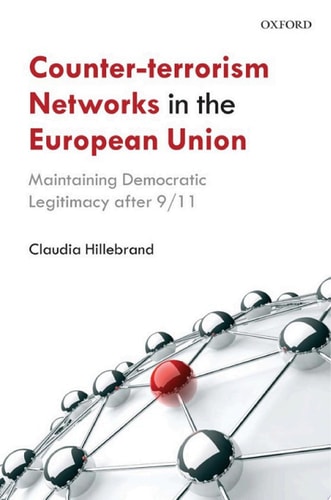
Counter-Terrorism Networks in the European Union: Maintaining Democratic Legitimacy after 9/11 presents a model of democratic legitimacy for within international counter-terrorism co-operation. Exploring the current practices of European Union (EU) counter-terrorism policing, developed after 9/11, it highlights the current significant challenges to democratic legitimacy and seeks to present tools and solutions which ensure 'democratic' counter-terrorism actions and the protection of human rights. Counter-terrorism policing is now a global concern, with co-operation between security authorities of different countries a crucial feature in the fight to prevent terrorism and extremism. Yet, given the emphasis on pre-emption, this type of policing tends to interfere to a far greater extent with the rights of the individual than traditional policing. This book scrutinises the current focus of enhanced communication between counter-terrorist associates at member-state and EU levels within Europe, alongside analysis of just how far the traditional, protective mechanisms of accountability and oversight are managing to keep up with this development. It proposes that current forms of counter-terrorism policing within the EU should be understood as networks - sets of expert institutional nodes or individual agents, from at least two countries - that are interconnected in order to authorize and provide security with regard to counter-terrorism, using the European Police Office (Europol) as a key example.
Menrva's Summary
THE THESIS
This book investigates how the European Union can maintain democratic legitimacy and protect human rights within the context of post-9/11 counter-terrorism cooperation. Claudia Hillebrand, an expert in European security politics, utilizes a network-based analytical framework to examine the tension between pre-emptive security measures and traditional oversight mechanisms. By analyzing the institutional nodes of EU counter-terrorism, the author argues for a re-evaluation of accountability structures to ensure that international policing efforts remain aligned with democratic principles.
THE SCOPE MAP
What You Will Find
- Analysis of EU counter-terrorism policing networks and institutional nodes
- A proposed model for democratic legitimacy in international security cooperation
- Examination of Europol as a primary case study for cross-border security agents
- Assessment of traditional accountability and oversight mechanisms
Scope Limits
- Does not provide a comprehensive history of all global counter-terrorism policies
- Focuses primarily on the EU institutional framework rather than individual member-state domestic policies
THE AUTHORITY PERSPECTIVE
Experts identify this work as a significant contribution to the study of security governance and democratic accountability in the European Union. Readers frequently note the academic density of the prose, which serves as a foundational text for scholars interested in the intersection of policing and human rights.
Page Count:
256
Publication Date:
2012-01-01
Publisher:
OUP Oxford
ISBN-10:
0191630608
ISBN-13:
9780191630606
International relations
Human rights
Professional Career & Trade
Law Enforcement
Counter Terrorism
European Union
Community Tags
Similar Books