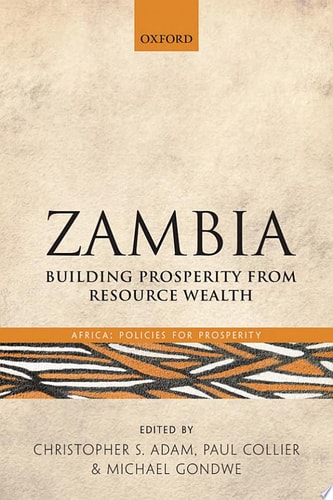
Zambia
0
0
As an Amazon Associate and affiliate partner, Menrva Books earns from qualifying purchases. Learn more
Author Description
Zambia Is A Landlocked Mineral Dependent Country In Southern Africa Whose History Is Intimately Entwined With The Copper Mining Industry. Having Gained Independence From Britain In 1964 At The Height Of A Copper Boom, The Country Experienced A Slow And Painful Economic Decline Over The Next Quarter Century. However, Following A Traumatic And Protracted Process Of Economic Adjustment Through The 1990s And Early 2000s, Zambia's Economic Potential Is Now Better Than It Has Been At Any Time Since Independence. This Book, Which Contains A Set Of Rigorous But Accessible Essays By A Range Of Zambian And International Scholars, Seeks To Examine The Challenges And Opportunities That Currently Face Zambian Policymakers As They Seek To Harness The Country's Valuable Natural Assets To Broad-based And Sustainable Economic Growth Over The Coming Decades. Written In A Non-technical Manner By Leading Scholars In The Field, The Chapters Address Key Challenges In The Areas Of Natural Resource Management, Agriculture, Trade, Employment And Migration, Education, Finance, And Investment. This Is The Second Volume In The Africa: Policies For Prosperity Series Following On From The Successful First Volume On Kenya.
Menrva's Summary
THE THESIS
This volume investigates how Zambia can effectively leverage its natural resource wealth to foster sustainable, broad-based economic growth following decades of volatility. The authors, including prominent scholars and policymakers, utilize historical economic data and contemporary policy analysis to evaluate the structural reforms necessary for long-term prosperity. The text provides a framework for understanding the transition from a copper-dependent state to a diversified, modern economy.
THE SCOPE MAP
What You Will Find
- Analysis of natural resource management and the copper mining industry
- Sector-specific evaluations of agriculture, trade, and education
- Discussion on employment, migration, and financial investment strategies
Scope Limits
- Does not provide a comprehensive political history of the nation beyond its economic implications
- Does not offer predictive modeling for future commodity price fluctuations
THE AUTHORITY PERSPECTIVE
Experts recognize this work as a significant contribution to the Africa: Policies for Prosperity series, noting its utility for both academics and policy practitioners. Readers frequently highlight the balance between rigorous economic analysis and accessible prose, making it a standard reference for understanding Zambian development.
Page Count:
448
Publication Date:
2014-01-01
Publisher:
Oup Oxford
ISBN-10:
0191636266
ISBN-13:
9780191636264
History
Economics
Community Tags
Similar Books