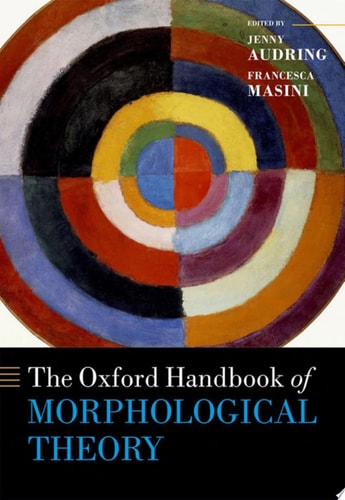
The Oxford Handbook of Morphological Theory
0
0
As an Amazon Associate and affiliate partner, Menrva Books earns from qualifying purchases. Learn more
Author Description
This Volume Is The First Handbook Devoted Entirely To The Multitude Of Frameworks Adopted In The Field Of Morphology, Including Minimalism, Optimality Theory, Network Morphology, Cognitive Grammar, And Canonical Typology. Following An Introduction From The Editors, The First Part Of The Volume Offers Critical Discussions Of The Main Theoretical Issues Within Morphology, Both In Word Formation And In Inflection, As Well As Providing A Short History Of Morphological Theory. In The Core Part Of The Handbook, Part Ii, Each Theory Is Introduced By An Expert In The Field, Who Guides The Reader Through Its Principles And Technicalities, Its Advantages And Disadvantages, And Its Points Of Agreement And Disagreement With Alternative Theories. Chapters In Part Iii Explore The Bigger Picture, Connecting Morphological Theory To Other Subdisciplines Of Linguistics, Such As Diachronic Change, Language Acquisition, Psycholinguistics, And Sign Language Theory. The Handbook Is Intended As A Guide For Morphologists From All Theoretical Backgrounds Who Want To Learn More About Frameworks Other Than Their Own, As Well As For Linguists In Related Subfields Looking For Theoretical Connections With The Field Of Morphology.
Menrva's Summary
THE THESIS
This volume investigates the diverse theoretical frameworks currently utilized to analyze morphological structures within the field of linguistics. Editors Francesca Masini and Jenny Audring curate contributions from leading experts to provide a comprehensive overview of how different schools of thought address word formation and inflection. The text serves as a comparative resource, mapping the historical development and current technical applications of various morphological models.
THE SCOPE MAP
What You Will Find
- Comparative analysis of frameworks including Minimalism, Optimality Theory, Network Morphology, and Cognitive Grammar.
- Historical context regarding the evolution of morphological theory.
- Interdisciplinary connections between morphology and fields such as psycholinguistics, language acquisition, and sign language theory.
Scope Limits
- The text focuses on theoretical frameworks rather than providing a descriptive grammar of any specific language.
- It does not serve as an introductory textbook for students without prior foundational knowledge in linguistics.
THE AUTHORITY PERSPECTIVE
Experts identify this volume as a primary reference for researchers seeking to navigate the complex landscape of competing morphological theories. Readers frequently note the high academic density of the prose, which is intended for professional linguists and advanced graduate students.
Page Count:
800
Publication Date:
2018-01-01
Publisher:
Oxford University Press
ISBN-10:
019164630X
ISBN-13:
9780191646300
Grammar
Linguistics
Morphology
Language Theory
Community Tags
Other Editions(4)


Similar Books