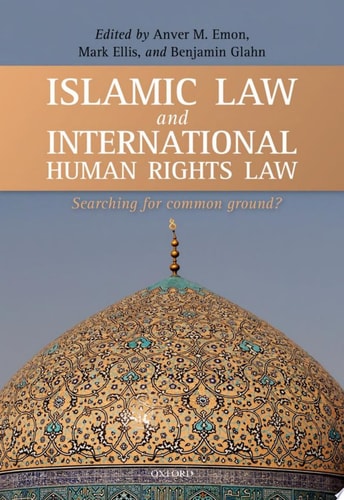
Islamic Law and International Human Rights Law
0
0
As an Amazon Associate and affiliate partner, Menrva Books earns from qualifying purchases. Learn more
Author Description
The Relationship Between Islamic Law And International Human Rights Law Has Been The Subject Of Considerable, And Heated, Debate In Recent Years. The Usual Starting Point Has Been To Test One System By The Standards Of The Other, Asking Is Islamic Law 'compatible' With International Human Rights Standards, Or Vice Versa. This Approach Quickly Ends In Acrimony And Accusations Of Misunderstanding. By Overlaying One Set Of Norms On Another We Overlook The Deeply Contextual Nature Of How Legal Rules Operate In A Society, And Meaningful Comparison And Discussion Is Impossible. In This Volume, Leading Experts In Islamic Law And International Human Rights Law Attempt To Deepen The Understanding Of Human Rights And Islam, Paving The Way For A More Meaningful Debate. Focusing On Central Areas Of Controversy, Such As Freedom Of Speech And Religion, Gender Equality, And Minority Rights, The Authors Examine The Contextual Nature Of How Islamic Law And International Human Rights Law Are Legitimately Formed, Interpreted, And Applied Within A Community. They Examine How These Fundamental Interests Are Recognized And Protected Within The Law, And What Restrictions Are Placed On The Freedoms Associated With Them. By Examining How Each System Recognizes And Limits Fundamental Freedoms, This Volume Clears The Ground For Exploring The Relationship Between Islamic Law And International Human Rights Law On A Sounder Footing. In Doing So It Offers A Challenging And Distinctive Contribution To The Literature On The Subject, And Will Be An Invaluable Reference For Students, Academics, And Policy-makers Engaged In The Legal And Religious Debates Surrounding Islam And The West.
Menrva's Summary
THE THESIS
This volume investigates the complex intersection between Islamic legal traditions and international human rights frameworks to move beyond binary debates of compatibility. The authors, including legal scholars and experts in international human rights, argue that previous attempts to measure one system against the other often fail due to a lack of contextual understanding. By analyzing the formation, interpretation, and application of legal rules within their respective societies, the contributors provide a framework for a more nuanced dialogue regarding fundamental rights and legal legitimacy.
THE SCOPE MAP
What You Will Find
- Comparative analysis of freedom of speech and religion
- Examination of gender equality and minority rights within legal frameworks
- Methodologies for interpreting legal norms in diverse cultural contexts
Scope Limits
- Does not provide a definitive resolution to all conflicts between the two systems
- Does not cover every specific national interpretation of Islamic law globally
THE AUTHORITY PERSPECTIVE
Experts recognize this volume as a significant contribution to legal scholarship for its shift away from confrontational comparative models. Readers frequently note the academic density of the prose, making it a resource primarily intended for students, researchers, and policy-makers.
Page Count:
416
Publication Date:
2012-01-01
Publisher:
Oxford University Press, Incorporated
ISBN-10:
0191645699
ISBN-13:
9780191645693
Legal Theory
Law
Freedom of religion
Human rights
International Law
Islamic Studies
Civil Rights
Religion and Politics
Islamic Law
Community Tags
Other Editions(2)

Similar Books




Reader Comments
Share Your Thoughts
No comments yet. Be the first to share your thoughts!