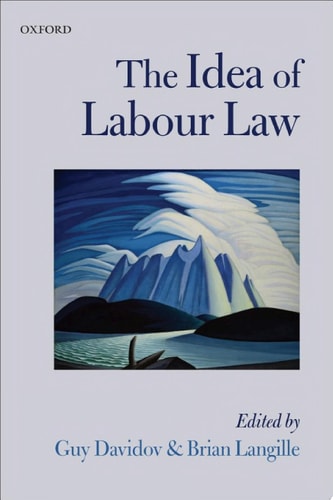
The Idea of Labour Law
0
0
As an Amazon Associate and affiliate partner, Menrva Books earns from qualifying purchases. Learn more
Author Description
Labour law is widely considered to be in crisis by scholars of the field. This crisis has an obvious external dimension - labour law is attacked for impeding efficiency, flexibility, and development; vilified for reducing employment and for favouring already well placed employees over less fortunate ones; and discredited for failing to cover the most vulnerable workers and workers in the "informal sector". These are just some of the external challenges to labour law. There is also an internal challenge, as labour lawyers themselves increasingly question whether their discipline is conceptually coherent, relevant to the new empirical realities of the world of work, and normatively salient in the world as we now know it. This book responds to such fundamental challenges by asking the most fundamental questions: What is labour law for? How can it be justified? And what are the normative premises on which reforms should be based? There has been growing interest in such questions in recent years. In this volume the contributors seek to take this body of scholarship seriously and also to move it forward. Its aim is to provide, if not answers which satisfy everyone, intellectually nourishing food for thought for those interested in understanding, explaining and interpreting labour laws - whether they are scholars, practitioners, judges, policy-makers, or workers and employers.
Menrva's Summary
THE THESIS
This volume investigates the foundational purpose and normative justification of labour law in an era defined by both external criticism and internal conceptual uncertainty. Editors Brian Langille and Guy Davidov curate a collection of scholarly essays that examine the discipline's relevance, coherence, and normative premises in response to modern economic and empirical shifts in the global workforce.
THE SCOPE MAP
What You Will Find
- Critical analysis of the external challenges facing labour law, including efficiency and flexibility debates.
- Theoretical frameworks for justifying labour law in contemporary society.
- Normative foundations for future legislative and policy reform.
- Diverse perspectives from legal scholars, practitioners, and policy-makers.
Scope Limits
- The text does not provide a comprehensive manual for specific national labor codes.
- It does not offer a singular, universally accepted solution to the identified crisis.
THE AUTHORITY PERSPECTIVE
Legal scholars and practitioners frequently cite this collection as a primary resource for understanding the theoretical underpinnings of modern labor regulation. Experts highlight the text as a sophisticated contribution to the field, noting its utility for those seeking to bridge the gap between abstract legal theory and practical policy application.
Page Count:
453
Publication Date:
2013-01-01
Publisher:
OUP Oxford
ISBN-10:
0191648078
ISBN-13:
9780191648076
Economics
Law
Professional Career & Trade
Labor Law
Sociology of Work
Employment Law
Legal Theory
Labor laws and legislation
Community Tags
Other Editions(4)
Similar Books



Reader Comments
Share Your Thoughts
No comments yet. Be the first to share your thoughts!