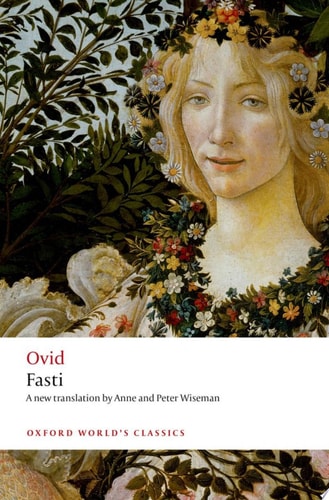
Fasti
0
0
As an Amazon Associate and affiliate partner, Menrva Books earns from qualifying purchases. Learn more
Author Description
'times And Their Reasons, Arranged In Order Through The Latin Year, And Constellations Sunk Beneath The Earth And Risen, I Shall Sing.' Ovid's Poetical Calendar Of The Roman Year Is Both A Day By Day Account Of Festivals And Observances And Their Origins, And A Delightful Retelling Of Myths And Legends Associated With Particular Dates. Written In The Late Years Of The Emperor Augustus, And Cut Short When The Emperor Sent The Poet Into Exile, The Poem's Tone Ranges From Tragedy To Farce, And Its Subject Matter From Astronomy And Obscure Ritual To Roman History And Greek Mythology. Among The Stories Ovid Tells At Length Are Those Of Arion And The Dolphin, The Rape Of Lucretia, The Shield That Fell From Heaven, The Adventures Of Dido's Sister, The Great Mother's Journey To Rome, The Killing Of Remus, The Bloodsucking Birds, And The Murderous Daughter Of King Servius. The Poem Also Relates A Wealth Of Customs And Beliefs, Such As The Unluckiness Of Marrying In May. This New Prose Translation Is Lively And Accurate, And Is Accompanied By A Contextualizing Introduction And Helpful Notes. About The Series: For Over 100 Years Oxford World's Classics Has Made Available The Widest Range Of Literature From Around The Globe. Each Affordable Volume Reflects Oxford's Commitment To Scholarship, Providing The Most Accurate Text Plus A Wealth Of Other Valuable Features, Including Expert Introductions By Leading Authorities, Helpful Notes To Clarify The Text, Up-to-date Bibliographies For Further Study, And Much More.
Menrva's Summary
THE PULSE
Ovid attempts to catalog the Roman calendar through a series of elegiac couplets, blending religious observance with mythological narrative. The poet seeks to document the origins of festivals, rituals, and astronomical phenomena associated with each day of the Roman year. He navigates the tension between the structured, state-sanctioned religious calendar and the fluid, often chaotic nature of the myths that underpin these traditions. The work is presented as a didactic poem, though it is frequently interrupted by the poet's own voice and the looming reality of his exile from Rome.
INSIDE THE PAGES
- Elegiac couplet structure
- Integration of Roman religious ritual
- Retelling of Greek and Roman myths
- Astronomical observations and star charts
- First-person commentary from the poet
- Historical anecdotes regarding Roman origins
- Shifts in tone from solemnity to farce
- Fragmentary nature due to the author's exile
THE COLLECTIVE ECHO
Readers and scholars frequently highlight the work as a primary source for understanding the intersection of Roman civic life and religious myth. Discussion often centers on the poem's unique position as both a scholarly calendar and a creative literary endeavor. Critics note the effectiveness of Ovid's ability to balance dry ritualistic detail with vivid, character-driven storytelling. The text is often analyzed for its reflection of Augustan-era politics and the poet's personal struggle during his final years in exile. Many readers appreciate the accessibility of the prose translation, which clarifies the complex mythological references embedded within the original Latin verse.
Page Count:
224
Publication Date:
2013-01-01
Publisher:
Oup Oxford
ISBN-10:
0191641944
ISBN-13:
9780191641947
Poetry
History
Mythology
Calendar
Community Tags
Other Editions(7)




Similar Books












Reader Comments
Share Your Thoughts
No comments yet. Be the first to share your thoughts!