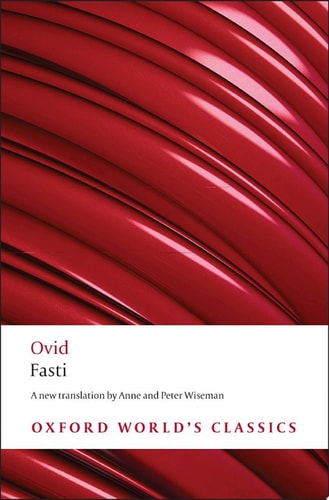
Fasti
0
0
As an Amazon Associate and affiliate partner, Menrva Books earns from qualifying purchases. Learn more
Author Description
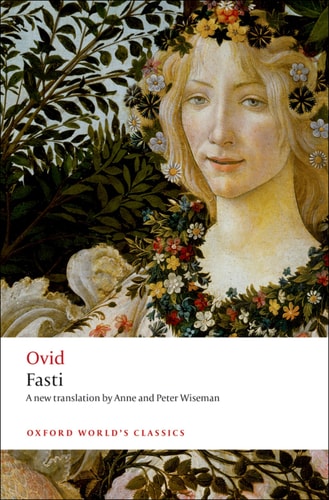
'Times and their reasons, arranged in order through the Latin year, and constellations sunk beneath the earth and risen, I shall sing.' Ovid's poetical calendar of the Roman year is both a day by day account of festivals and observances and their origins, and a delightful retelling of myths and legends associated with particular dates. Written in the late years of the emperor Augustus, and cut short when the emperor sent the poet into exile, the poem's tone ranges from tragedy to farce, and its subject matter from astronomy and obscure ritual to Roman history and Greek mythology. Among the stories Ovid tells at length are those of Arion and the dolphin, the rape of Lucretia, the shield that fell from heaven, the adventures of Dido's sister, the Great Mother's journey to Rome, the killing of Remus, the bloodsucking birds, and the murderous daughter of King Servius. The poem also relates a wealth of customs and beliefs, such as the unluckiness of marrying in May. This new prose translation is lively and accurate, and is accompanied by a contextualizing introduction and helpful notes. ABOUT THE SERIES: For over 100 years Oxford World's Classics has made available the widest range of literature from around the globe. Each affordable volume reflects Oxford's commitment to scholarship, providing the most accurate text plus a wealth of other valuable features, including expert introductions by leading authorities, helpful notes to clarify the text, up-to-date bibliographies for further study, and much more.
Menrva's Summary
THE PULSE
Ovid attempts to catalog the Roman calendar and its associated religious festivals, myths, and astronomical events through a structured, poetic lens. The narrator acts as a guide through the months of the year, seeking to explain the origins of Roman customs while navigating the complex interplay between divine mythology and civic duty. The work is constrained by the chronological progression of the Roman calendar, yet it frequently diverges into digressions regarding the nature of the gods and the history of the Roman people. This narrative framework serves as both an educational text and a creative exploration of cultural identity during the reign of Augustus.
INSIDE THE PAGES
- Chronological organization following the Roman calendar year
- Integration of Greek and Roman mythological narratives
- Explanations of religious rituals and civic observances
- Astronomical observations regarding constellations and seasonal shifts
- Stylistic shifts between tragic accounts and comedic anecdotes
- Historical commentary on the foundation of Rome and its leaders
- Use of etymological explanations for festival names
- Inclusion of scholarly notes and contextual introductions
THE COLLECTIVE ECHO
Discussion often centers on the unique position of this work as both a historical document and a piece of creative literature. Readers frequently highlight the contrast between the poem's lighthearted, witty tone and the underlying political tensions of Ovid's exile. Critics often examine how the text balances the rigid structure of the calendar with the fluidity of the myths contained within. The work is widely regarded as a significant resource for understanding the religious and social fabric of ancient Rome. Scholars continue to analyze the poem's unfinished state and the implications of its abrupt conclusion.
Page Count:
224
Publication Date:
2013-01-01
Publisher:
OUP Oxford
ISBN-10:
0191641952
ISBN-13:
9780191641954
Poetry
Roman History
English
Classical
Ancient History
English & College Success
Mythology
Community Tags
Other Editions(7)




Similar Books
Reader Comments
Share Your Thoughts
No comments yet. Be the first to share your thoughts!