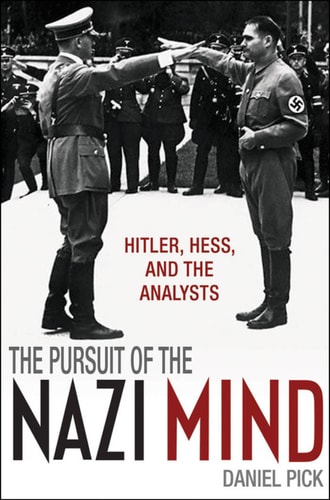
The Pursuit of the Nazi Mind: Hitler, Hess, and the Analysts
0
0
As an Amazon Associate and affiliate partner, Menrva Books earns from qualifying purchases. Learn more
Author Description
The story of how psychoanalysis was used in the war against Nazi Germany - in the crucial quest to understand the Nazi mind. Daniel Pick brings both the skills of the historian and the trained psychoanalyst to weave together the story of clinical encounters with leading Nazis and the Allies' broader interpretations of the Nazi high command and the mentality of the wider German public who supported them. Following the bizarre capture of Hitler's deputy Rudolf Hess in 1941, Pick follows closely the story of how leading British psychiatrists assessed their new charge, in an attempt to understand both the man himself and the psychological bases of his Nazi convictions. At the same time, he uncovers the story of how a team of American officers working for the OSS, the forerunner of the CIA, were engaged in an attempt to understand Hitler's personality from afar, using the theories and techniques of Sigmund Freud. Drawing upon a large cache of archives on both sides of the Atlantic, Pick asks what such psychoanalytical and psychiatric investigations set out to do, showing how Freud's famous 'talking cure' was harnessed to the particular needs of military intelligence during the war and the task of post-war reconstruction that followed. Looking beyond this, he then shows just how deeply post-war Western understandings of how minds work and groups operate were influenced by these wartime attempts to interpret the psychopathology of Nazism.
Menrva's Summary
THE THESIS
This book investigates how Allied intelligence agencies utilized psychoanalytic theories to interpret the psychological motivations of Nazi leadership and the German public during and after World War II. Daniel Pick, a historian and trained psychoanalyst, examines the intersection of clinical psychiatry and military strategy. He analyzes how the OSS and British psychiatrists attempted to apply Freudian techniques to understand figures like Rudolf Hess and Adolf Hitler, ultimately arguing that these wartime efforts fundamentally shaped post-war Western psychological discourse.
THE SCOPE MAP
What You Will Find
- Detailed accounts of the psychiatric assessment of Rudolf Hess following his 1941 capture.
- Analysis of the OSS project to construct a psychological profile of Hitler from a distance.
- Exploration of the influence of psychoanalysis on military intelligence and post-war reconstruction.
- Examination of how wartime interpretations of Nazi psychopathology impacted modern understandings of group behavior.
Scope Limits
- The text does not provide a comprehensive biography of the Nazi leaders themselves.
- It does not offer a clinical diagnosis of the subjects, focusing instead on the history of the analytical process.
THE AUTHORITY PERSPECTIVE
Experts recognize this work as a significant contribution to the history of ideas, specifically regarding the application of clinical theory to geopolitical conflict. Readers frequently note the academic rigor of the research and the author's ability to synthesize complex historical archives with psychological methodology.
Page Count:
366
Publication Date:
2012-01-01
Publisher:
OUP Oxford
ISBN-10:
0191641049
ISBN-13:
9780191641046
Psychology
Biography
History
Military History
Psychoanalysis
World War
Military Intelligence
Community Tags
Similar Books