Brevity
0
0
As an Amazon Associate and affiliate partner, Menrva Books earns from qualifying purchases. Learn more
Author Description
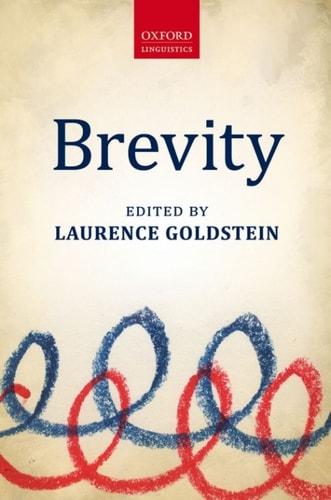
Brevity in conversation is a window to the workings of the mind. This book brings it into prominence as both a multifaceted topic of deep philosophical importance and a phenomenon that serves as a testing ground for theories in linguistics, psycholinguistics, and computer modeling. Brevity is achieved in a variety of ways. Speakers use elliptical constructions and exploit salient features of the conversational environment in a process of pragmatic enrichment so as to pack as much as possible into a few words. They take account of what has already been said in the current and previous conversations, and tailor their words to what they know about the beliefs and personalities of the people they're talking to. Most of the time they do all this with no obvious mental effort. The book, which brings together distinguished linguists, philosophers, and cognitive scientists, is the product of an interactive multidisciplinary research project that extended over four years. The questions dealt with concern how speakers secure understanding of what they mean when what they mean far outstrips the literal or compositional meanings of the sentences or sentence fragments that they use. Brevity sheds new light on economy in discourse. It will appeal to linguists, philosophers, and psychologists at advanced undergraduate level and above.
Menrva's Summary
THE THESIS
How do speakers achieve successful communication when the intended meaning significantly exceeds the literal or compositional content of their utterances? Editor Laurence Goldstein compiles research from a multidisciplinary project involving linguists, philosophers, and cognitive scientists to examine the mechanisms of brevity in discourse. The text investigates how speakers utilize elliptical constructions, pragmatic enrichment, and contextual knowledge to convey complex information with minimal linguistic output.
THE SCOPE MAP
What You Will Find
- Analysis of elliptical constructions and pragmatic enrichment in conversation.
- Examination of how speakers leverage shared conversational history and listener beliefs.
- Multidisciplinary perspectives from linguistics, psycholinguistics, and computer modeling.
Scope Limits
- The text focuses primarily on advanced academic discourse rather than casual or non-academic communication.
- It does not provide a comprehensive guide to conversational etiquette or social skills.
THE AUTHORITY PERSPECTIVE
Experts identify this volume as a significant contribution to the study of discourse economy and cognitive pragmatics. Readers frequently note the academic density of the prose, making it most suitable for researchers and students at the advanced undergraduate level and above.
Page Count:
368
Publication Date:
2013-01-01
Publisher:
OUP Oxford
ISBN-10:
0191642851
ISBN-13:
9780191642852
Philosophy
English
Psycholinguistics
Linguistics
Communication Studies
English & College Success
Community Tags
Other Editions(3)


Similar Books