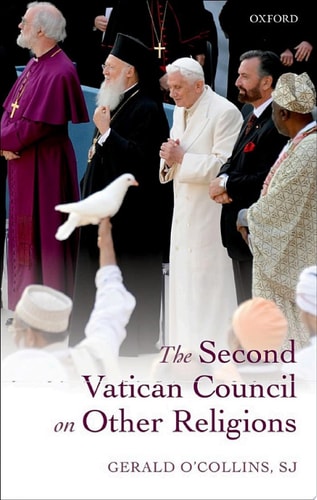
The Second Vatican Council on Other Religions
0
0
As an Amazon Associate and affiliate partner, Menrva Books earns from qualifying purchases. Learn more
Author Description
Many observers greeted the Second Vatican Council (1962-65) as the most important religious event in the twentieth century. Its implementation and impact are still being felt in the Catholic Church, the wider Christian world, and beyond. One sea change that Vatican II brought concerned Roman Catholic attitudes towards Judaism, Islam, and other religions. Gerald O'Collins breaks fresh ground by examining in detail five documents from the Council which embodied a new mindset about other religious faiths and mandated changes that quickly led to international and national dialogues between the Catholic Church and the followers of non-Christian religions. The book also includes chapters on the insights that prepared the way for the rethinking expressed by Vatican II, and on the follow-up to the Council's teaching found in the work of Pope John Paul II and Jacques Dupuis. O'Collins ably illustrates how the Council made a startling advance in official Catholic teaching about followers of other living faiths. Carefully researched, the book is written in the clear, accessible style that readers of previous works by O'Collins will recognize.
Menrva's Summary
THE THESIS
This book investigates how the Second Vatican Council fundamentally altered the Roman Catholic Church's theological and practical stance toward Judaism, Islam, and other non-Christian religions. Gerald O'Collins, a Jesuit theologian with extensive expertise in systematic theology and ecumenism, utilizes primary conciliar documents and subsequent papal teachings to construct his argument. He posits that the Council initiated a significant shift in official doctrine, moving from historical exclusion toward a framework of dialogue and mutual respect.
THE SCOPE MAP
What You Will Find
- Detailed analysis of five specific Vatican II documents regarding non-Christian faiths
- Historical context on the theological insights that preceded the Council
- Examination of the post-conciliar contributions of Pope John Paul II and theologian Jacques Dupuis
Scope Limits
- The text does not provide a comprehensive history of the entire Second Vatican Council
- It does not focus on internal Catholic liturgical reforms unrelated to interreligious relations
THE AUTHORITY PERSPECTIVE
Experts recognize this work as a precise and accessible contribution to the study of post-conciliar theology. Readers frequently note the clarity of O'Collins' prose, which makes complex theological shifts understandable for both academic and general audiences.
Page Count:
227
Publication Date:
2013-01-01
Publisher:
OUP Oxford
ISBN-10:
0191652903
ISBN-13:
9780191652905
History
Religion
Catholic Church
Theology
Interfaith Dialogue
Christianity and other religions
Vatican II
Catholicism
Community Tags
Similar Books