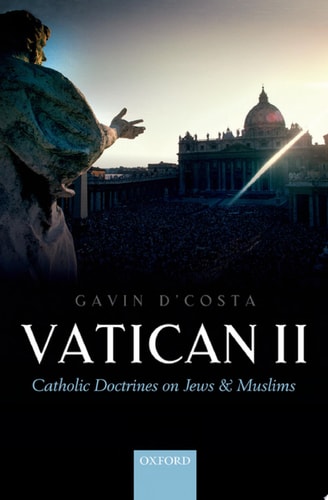
Vatican II: Catholic Doctrines on Jews and Muslims
0
0
As an Amazon Associate and affiliate partner, Menrva Books earns from qualifying purchases. Learn more
Author Description
Gavin D'Costa breaks new ground in this authoritative study of the Second Vatican Council's doctrines on other religions, with particular attention to Judaism and Islam. The focus is exclusively on the doctrinal foundations found in Lumen Gentium 16 that will serve Catholicism in the twenty first century. D'Costa provides a map outlining different hermeneutical approaches to the Council, whilst synthesising their strengths and providing a critique of their weaknesses. Moreover, he classifies the different authority attributed to doctrines thereby clarifying debates regarding continuity, discontinuity, and reform in doctrinal teaching. Vatican II: Catholic Doctrines on Jews and Muslims expertly examines the Council's revolutionary teaching on Judaism which has been subject to conflicting readings, including the claim that the Council reversed doctrinal teachings in this area. Through a rigorous examination of the debates, the drafts, the official commentary, and with consideration of the previous Council and papal doctrinal teachings on the Jews, D'Costa lays bare the doctrinal achievements of the Council, and concludes with a similar detailed examination of Catholic doctrines on Islam. This innovative text makes essential interventions in the debate about Council hermeneutics and doctrinal teachings on the religions.
Menrva's Summary
THE THESIS
This book investigates the doctrinal foundations of the Second Vatican Council regarding Judaism and Islam, specifically focusing on the implications of Lumen Gentium 16 for contemporary Catholicism. Gavin D'Costa, a scholar of theology, utilizes a rigorous analysis of council drafts, official commentaries, and historical papal teachings to evaluate how these doctrines are interpreted. He presents a framework for understanding the authority of these teachings, addressing the ongoing debates surrounding continuity and reform within the Church.
THE SCOPE MAP
What You Will Find
- A detailed analysis of Lumen Gentium 16.
- A classification system for the authority levels of specific doctrines.
- A comparative study of Catholic theological positions on Judaism and Islam.
- A critique of various hermeneutical approaches to the Second Vatican Council.
Scope Limits
- The text does not provide a comprehensive history of the entire Second Vatican Council.
- It does not cover inter-religious dialogue practices outside of formal doctrinal teaching.
THE AUTHORITY PERSPECTIVE
Scholars and theologians recognize this work as a significant contribution to the study of post-conciliar doctrinal development. Readers frequently note the academic density of the prose, which is intended for those with a background in formal theological discourse.
Page Count:
272
Publication Date:
2014-01-01
Publisher:
OUP Oxford
ISBN-10:
0191634158
ISBN-13:
9780191634154
Religion
Catholic Church
Islam
Catholicism
Judaism
Theology
Vatican II
Community Tags
Similar Books