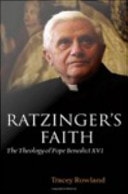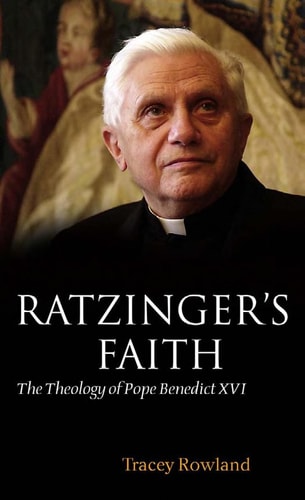
Ratzinger's Faith: The Theology of Pope Benedict XVI
0
0
As an Amazon Associate and affiliate partner, Menrva Books earns from qualifying purchases. Learn more
Author Description
A popular reading of Joseph Ratzinger (Benedict XVI) is that he started out as a progressive but had second thoughts after the cultural revolution of the late 1960s. A more negative portrait is that of an ambitious and intellectually precocious young man who changed theological allegiances for the sake of promotion within the Catholic hierarchy.Now, in this probing book, Tracey Rowland offers a third reading, one that situates the thought of Pope Benedict within the intellectual history and academic circles of his time. The first serious assessment of the new Pope's theological vision, this thoughtful volume covers topics such as the interpretations of the Second Vatican Council, Pope Benedict's relations with other important scholars and theologians, and his attitudes on moral and political theology, western culture, the structure of the Catholic Church, liturgy, and love. It has become a commonplace observation that Pope Benedict has been influenced by the thought of St. Augustine in contrast to many of his predecessors in the papacy who were much more strongly influenced by St. Thomas Aquinas. This work therefore addresses the topic of in what way Benedict is an Augustinian. The volume also includes a bibliography arranged thematically for those who want to explore his thought more deeply in a particular area.A penetrating account of the thought of the reigning pontiff, this volume offers a wealth of insight for everyone interested in Pope Benedict and the direction of the modern Catholic Church.
Menrva's Summary
THE THESIS
This book investigates the intellectual development and theological framework of Pope Benedict XVI to determine the consistency of his thought throughout his career. Tracey Rowland, a scholar of theology, challenges the common narrative that Ratzinger underwent a radical shift from progressive to conservative. Instead, she situates his work within the specific academic and cultural context of 20th-century European theology, arguing that his positions are rooted in a coherent, long-standing intellectual project rather than political opportunism.
THE SCOPE MAP
What You Will Find
- Analysis of Ratzinger's interpretation of the Second Vatican Council and its aftermath.
- Examination of the influence of St. Augustine versus St. Thomas Aquinas on Benedict's theological methodology.
- Discussion of his views on moral theology, political theory, and the structure of the Catholic Church.
- A thematically organized bibliography for further research into specific areas of his thought.
THE AUTHORITY PERSPECTIVE
Scholars and theologians recognize this work as a significant contribution to understanding the intellectual foundations of Benedict XVI's papacy. Readers frequently note the academic rigor of the prose, which provides a necessary corrective to more simplistic media portrayals of the Pope's theological evolution.
Page Count:
224
Publication Date:
2008-03-20
Publisher:
Oxford University Press
ISBN-10:
0199207402
ISBN-13:
9780199207404
Biography
Philosophy
Religion
Catholicism
Catholic Church
Theology