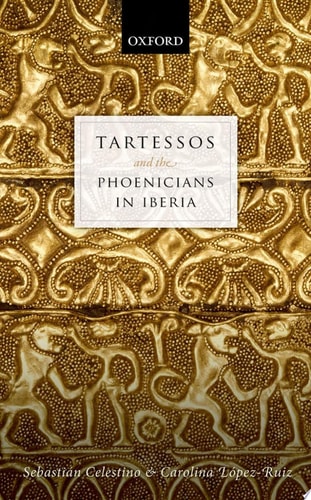
Tartessos and the Phoenicians in Iberia
0
0
As an Amazon Associate and affiliate partner, Menrva Books earns from qualifying purchases. Learn more
Author Description
This is the first book in English about the earliest historical civilization in the western Mediterranean, known as "Tartessos." Endowed with extraordinary wealth in metals and strategically positioned between the Atlantic and Mediterranean trading routes at the time of Greek and Phoenician colonial expansion, Tartessos flourished in the eight-seventh centuries BCE. Tartessos became a literate, sophisticated, urban culture in southwestern Iberia (today's Spain and Portugal), enriched by commercial contacts with the Aegean and the Levant since at least the ninth century. In its material culture (architecture, grave goods, sanctuaries, plastic arts), we see how native elements combined with imported "orientalizing" innovations introduced by the Phoenicians. Historians of the rank of Herodotos and Livy, geographers such as Strabo and Pliny, Greek and Punic periploi and perhaps even Phoenician and Hebrew texts, testify to the power, wealth, and prominence of this westernmost Mediterranean civilization. Archaeologists, in turn, have demonstrated the existence of a fascinating complex society with both strong local roots and international flare. Yet for still-mysterious reasons, Tartessos did not attain a "Classical" period like its peer emerging cultures did at the same time (Etruscans, Romans, Greeks). This book combines the expertise of its two authors in archaeology, philology, and cultural history to present a comprehensive, coherent, theoretically up-to-date, and informative overview of the discovery, sources, and debates surrounding this puzzling culture of ancient Iberia and its complex hybrid identity vis-à-vis the western Phoenicians. This book will be of great interest to students of the classics, archaeology and ancient history, Phoenician-Punic studies, colonization and cultural contact.
Menrva's Summary
THE THESIS
This book investigates the historical identity, cultural development, and eventual decline of Tartessos, the earliest complex civilization in the western Mediterranean. Authors Carolina López-Ruiz and Sebastián Celestino utilize their combined expertise in archaeology, philology, and cultural history to synthesize existing evidence. They argue that Tartessos functioned as a sophisticated, literate society shaped by the intersection of indigenous Iberian roots and Phoenician colonial influence. The text provides a framework for understanding how this civilization navigated international trade routes before its mysterious disappearance from the historical record.
THE SCOPE MAP
What You Will Find
- Analysis of material culture including architecture, grave goods, and sanctuaries
- Examination of primary source references from Greek, Roman, and Punic texts
- Discussion of the hybrid identity resulting from Phoenician and Aegean contact
- Overview of the discovery and historiographical debates surrounding Tartessos
Scope Limits
- Does not provide a definitive explanation for the civilization's sudden decline
- Focuses primarily on the eighth to seventh centuries BCE rather than later periods
THE AUTHORITY PERSPECTIVE
Experts recognize this work as a significant contribution to the field, as it serves as the first comprehensive English-language study of Tartessian civilization. Scholars frequently note that the authors successfully bridge the gap between archaeological data and philological analysis to provide a coherent narrative for both students and researchers.
Page Count:
424
Publication Date:
2016-01-01
Publisher:
OUP Oxford
ISBN-10:
0191653373
ISBN-13:
9780191653377
History
Iberian History
Europe
Archaeology
European History
Community Tags
Similar Books