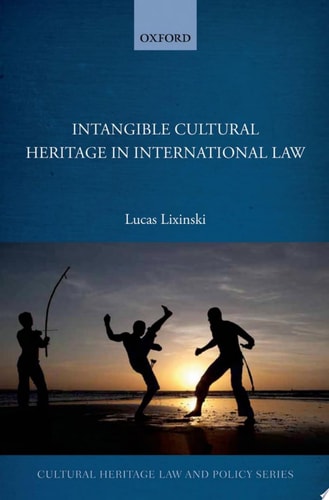
Intangible Cultural Heritage in International Law
0
0
As an Amazon Associate and affiliate partner, Menrva Books earns from qualifying purchases. Learn more
Author Description
This Book Offers A Comprehensive Analysis Of The Legal Issues Around Intangible Cultural Heritage (also Known As Traditional Cultural Expressions Or Folklore). It Explores Both Institutional And Substantive Responses The Law Offers To The Safeguarding Of Intangible Heritage, Relying Heavily On Critiques Internal And External To The Law. These External Critiques Primarily Come From The Disciplines Of Anthropology And Heritage Studies. Intangible Cultural Heritage Is Safeguarded On Three Different Levels: International, Regional, And National. At The International Level, The Foremost Instrument Is The Specific Unesco Convention For The Safeguarding Of The Intangible Cultural Heritage (2003). At The Regional Level, Initiatives Are Undertaken Both In Schemes Of Political And Economic Integration, A Common Thread Being That Intangible Cultural Heritage Helps Promote A Common Identity For The Region, Becoming Thus A Desirable Aspect Of The Integration Process. Domestically, Responses Range From Strong Constitutional Forms Of Protection To Rather Weak Policy Initiatives Aimed Primarily At Attracting Foreign Aid. Intangible Heritage Can Also Be Safeguarded Via Substantive Law, And, In This Respect, The Book Looks At The Potential And Pitfalls Of Human Rights Law, Intellectual Property Tools, And Contractual Approaches. It Investigates How The Law Works And Ought To Work Towards Protecting Communities, Defined As Those From Where Intangible Cultural Heritage Stems, And To Whom Benefits Of Its Exploitation Must Return. The Book Takes The Critiques From Anthropological And Heritage Studies Into Account In Order To Posit A Re-shaped Law, Offering Tools That Can Be Valuable To Both Scholars And Practitioners When Understanding How To Safeguard Intangible Heritage.
Menrva's Summary
THE THESIS
How can international, regional, and domestic legal frameworks effectively safeguard intangible cultural heritage while addressing the complex needs of the communities from which it originates? Lucas Lixinski, an expert in international cultural heritage law, evaluates the current institutional and substantive mechanisms designed to protect traditional cultural expressions. By integrating perspectives from anthropology and heritage studies, the author critiques existing legal structures and proposes a re-shaped approach that balances community rights with broader economic and political integration goals.
THE SCOPE MAP
What You Will Find
- Analysis of the 2003 UNESCO Convention for the Safeguarding of the Intangible Cultural Heritage.
- Comparative study of regional and national legal responses to heritage protection.
- Examination of human rights law, intellectual property tools, and contractual agreements as protective mechanisms.
- Integration of interdisciplinary critiques from anthropology and heritage studies.
Scope Limits
- The text does not provide a comprehensive manual for specific litigation strategies in every jurisdiction.
- It does not cover the entirety of tangible cultural heritage law, focusing strictly on intangible expressions and folklore.
THE AUTHORITY PERSPECTIVE
Legal scholars and practitioners identify this work as a foundational text for understanding the intersection of international law and cultural anthropology. Readers frequently note the academic density of the prose, which serves as a rigorous resource for those navigating the complexities of heritage policy and community rights.
Page Count:
296
Publication Date:
2013-01-01
Publisher:
Oxford University Press
ISBN-10:
0191668893
ISBN-13:
9780191668890
Cultural property protection
International Law
Human rights
Anthropology
Law
Intellectual Property
Community Tags
Other Editions(3)

Similar Books





Reader Comments
Share Your Thoughts
No comments yet. Be the first to share your thoughts!