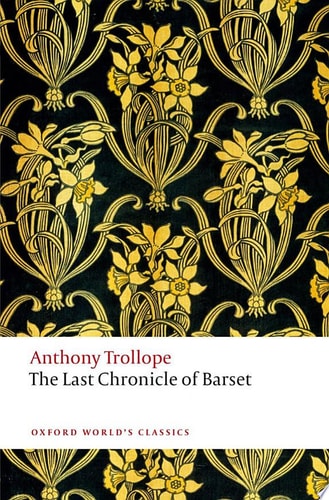
The Last Chronicle of Barset
0
0
As an Amazon Associate and affiliate partner, Menrva Books earns from qualifying purchases. Learn more
Author Description
all Hogglestock Believed Their Parson To Be Innocent; But Then All Hogglestock Believed Him To Be Mad. Josiah Crawley Lives With His Family In The Parish Of Hogglestock, East Barsetshire, Where He Is Perpetual Curate. Impoverished Like His Parishioners, Crawley Is Hard-working And Respected But He Is An Unhappy, Disappointed Man, Ill-suited To Cope When Calamity Strikes. He Is Accused Of Stealing A Cheque To Pay Off His Debts; Too Proud To Defend Himself, He Risks Ruin And Disgrace Unless The Truth Can Be Brought To Light. Crawley's Predicament Divides The Community Into Those Who Seek To Help Him Despite Himself, And Those Who, Like Mrs Proudie, Are Convinced Of His Guilt. When The Archbishop's Son, Major Grantly, Falls In Love With Crawley's Daughter Grace, Battle Lines Are Drawn. The Final Volume In The Barsetshire Series, The Last Chronicle Draws To A Close The Stories Of Many Beloved Characters, Including The Old Warden, Mr Harding, Johnny Eames, And Lily Dale. Panoramic In Scale, Elegiac And Moving, It Is Perhaps Trollope's Greatest Novel.
Menrva's Summary
THE PULSE
The Reverend Josiah Crawley faces a devastating accusation of theft that threatens to dismantle his reputation and the future of his family. Crawley, an impoverished and temperamentally difficult curate, finds himself under suspicion for stealing a cheque, a charge he is too proud and emotionally volatile to effectively refute. His struggle is compounded by the social pressures of the Barsetshire community, where his daughter Grace’s budding romance with Major Grantly becomes a focal point of class-based conflict. The narrative operates as a multi-stranded social study, tracking the moral and legal consequences of the accusation across various strata of Victorian society. Through a third-person omniscient perspective, the text examines the intersection of personal integrity, institutional power, and the rigid expectations of the clergy.
INSIDE THE PAGES
- Detailed exploration of Victorian clerical life and social hierarchy
- Multi-perspective narrative tracking various subplots within Barsetshire
- Character-driven focus on moral ambiguity and personal pride
- Satirical commentary on ecclesiastical politics and local governance
- Integration of romantic subplots with legal and financial crises
- Realistic dialogue reflecting the social status of diverse characters
- Pacing that balances domestic drama with broader community tension
- Concluding arcs for long-standing characters from the series
THE COLLECTIVE ECHO
Discussion often centers on the psychological depth of Josiah Crawley, whom many readers identify as one of the most complex figures in the Victorian canon. Critics frequently highlight the novel's panoramic scope, noting how it successfully balances the intimate struggles of a single family with the broader social dynamics of an entire county. Readers often appreciate the nuanced portrayal of the clergy, which avoids simple archetypes in favor of flawed, humanized individuals. The pacing is frequently described as deliberate, allowing for a thorough examination of the thematic threads regarding reputation and social standing. This work is widely regarded as a significant achievement in the study of nineteenth-century social structures and personal morality.
Page Count:
784
Publication Date:
2014-01-01
Publisher:
Oup Oxford
ISBN-10:
0191663468
ISBN-13:
9780191663468
Romance
Fiction
Realism
Classic Literature
British literature
Social Satire
Victorian
Community Tags
Other Editions(21)

Creative Media Partners, LLC
2025
Default edition
Creative Media Partners, LLC
2022

Alpha Editions
2021

Independently Published
2018

CreateSpace Independent Publishing Platform
2017

CreateSpace Independent Publishing Platform
2017

hansebooks
2017
Oxford University Press
2015

Simon & Schuster
2014
Oup Oxford
2014
OUP Oxford
2014
Penguin UK
2012
Oxford University Press
2005

Ebookslib
2005

eBooksLib
2005

NuVision Publications
2004

Penguin UK
2002

Books On Tape
1996
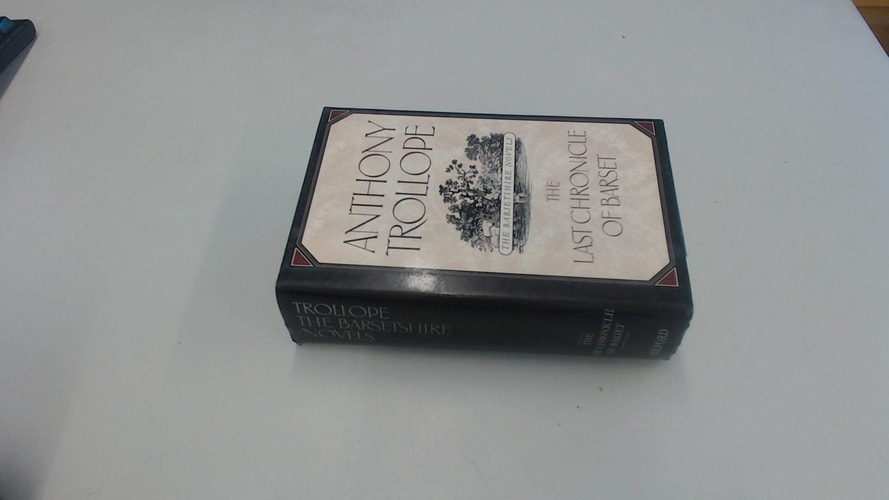
Oxford University Press
1989
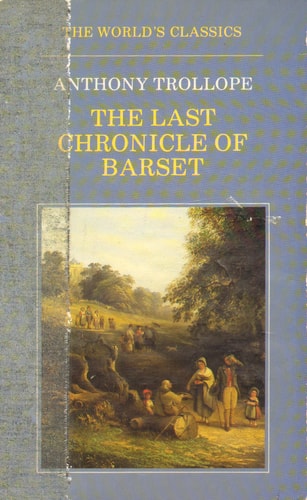
Oxford University Press
1981
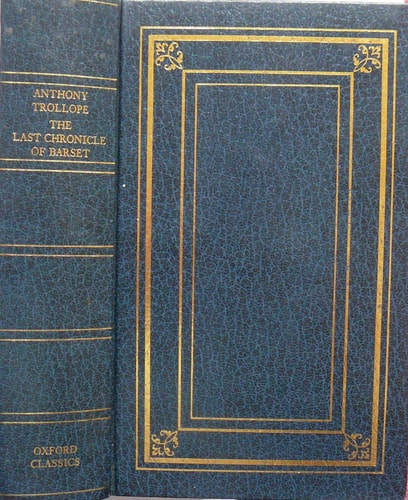
Oxford University Press
1981
Similar Books


Reader Comments
Share Your Thoughts
No comments yet. Be the first to share your thoughts!