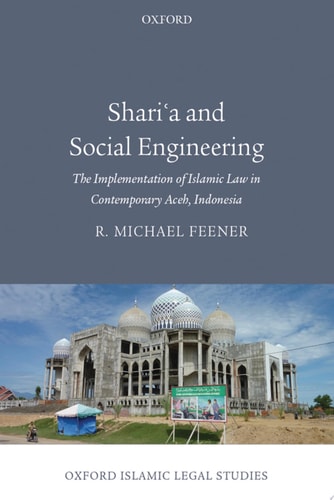
Shari'a and Social Engineering: The Implementation of Islamic Law in Contemporary Aceh, Indonesia
0
0
As an Amazon Associate and affiliate partner, Menrva Books earns from qualifying purchases. Learn more
Author Description
This Book Seeks To Open New Lines Of Discussion About How Islamic Law Is Viewed As A Potential Tool For Programs Of Social Transformation In Contemporary Muslim Society. It Does This Through A Critical Examination Of The Workings Of The State Shari'a System As It Was Designed And Implemented At The Turn Of The Twenty-first Century In Aceh, Indonesia. While The Empirical Details Of These Discussions Are Unique, This Particular Case Presents A Remarkable Site For Investigating The Broader Issue Of The Impact Of Instrumentalist, Future-oriented Visions Of Islamic Law On Modern Muslim Calls For The State Implementation Of Islamic Law. In Post-tsunami/post-conflict Aceh, The Idea Of Shari'a As An Exercise In Social Engineering Was Amplified Through Resonance With An Increasingly Pervasive Rhetoric Of 'total Reconstruction'. Based Upon Extensive Fieldwork As Well As Critical Readings Of A Wide Range Of Archival Materials, Official Documents, And Local Publications This Work Focuses On The Institutions And Actors Involved With This Contemporary Project For The State Implementation Of Islamic Law. The Individual Chapters Are Structured To Deal With The Major Components Of This System To Critically Examine How These Institutions Have Taken Shape And How They Work. It Also Shows How The Overall System Was Informed Not Only By Aspects Of Late Twentieth-century Da'wa Discourses Of Islamic Reform, But Also Modern Trends In Sociological Jurisprudence And The Impact Of Global Models Of Disaster Relief, Reconstruction, And Development. All Of These Streams Of Influence Have Contributed Significantly To Shaping The Ways In Which The Architects And Agents Of The State Shari'a System Have Attempted To Use Islamic Legislation And Legal Institutions As Tools To Steer Society In Particular Desired Directions.
Menrva's Summary
THE THESIS
This book investigates how Islamic law is utilized as a deliberate instrument for social transformation and state-led reconstruction in contemporary Aceh, Indonesia. R. Michael Feener, a scholar specializing in the history and sociology of Islam in Southeast Asia, provides a rigorous analysis of the implementation of Shari'a systems following the region's post-tsunami and post-conflict recovery. By examining the intersection of local religious reform, sociological jurisprudence, and global development models, the author argues that the state's adoption of Islamic law functions as a form of social engineering aimed at steering society toward specific ideological goals.
THE SCOPE MAP
What You Will Find
- Analysis of the institutional framework of the Aceh Shari'a system.
- Examination of the influence of late twentieth-century Da'wa discourses on legal policy.
- Integration of archival research, official government documentation, and local publications.
- Investigation into the impact of global disaster relief and reconstruction models on local governance.
Scope Limits
- The study is geographically confined to the specific administrative and social context of Aceh, Indonesia.
- The analysis focuses primarily on the state-led implementation of law rather than grassroots or private religious practice.
THE AUTHORITY PERSPECTIVE
Experts recognize this work as a significant contribution to the study of modern Islamic legal systems and their intersection with state-building. Readers frequently note the academic density of the prose and the author's meticulous use of primary source materials to support his sociological framework.
Page Count:
300
Publication Date:
2013-01-01
Publisher:
Oxford University Press
ISBN-10:
0191668060
ISBN-13:
9780191668067
Sociology of Law
Indonesia
Islamic Law
Social Engineering
Community Tags
Other Editions(3)

Similar Books







Reader Comments
Share Your Thoughts
No comments yet. Be the first to share your thoughts!