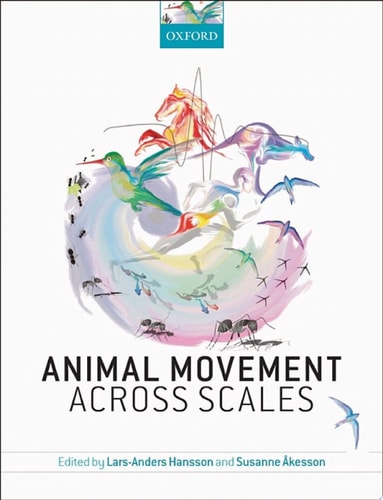
Animal Movement Across Scales
0
0
As an Amazon Associate and affiliate partner, Menrva Books earns from qualifying purchases. Learn more
Author Description
Movement, dispersal, and migration on land, in the air, and in water, are pervading features of animal life. They are performed by a huge variety of organisms, from the smallest protozoans to the largest whales, and can extend over widely different distance scales, from the microscopic to global. Integrating the study of movement, dispersal, and migration is crucial for a detailed understanding of the spatial scale of adaptation, and for analysing the consequences of landscape and climate change as well as of invasive species. This novel book adopts a broad, cross-taxonomic approach to animal movement across both temporal and spatial scales, addressing how and why animals move, and in what ways they differ in their locomotion and navigation performance. Written by an integrated team of leading researchers, the book synthesizes our current knowledge of the genetics of movement, including gene flow and local adaptations, whilst providing a future perspective on how patterns of animal migration may change over time together with their potential evolutionary consequences. Novel technologies for tracking the movement of organisms across scales are also discussed, ranging from satellite devices for tracking global migrations to nanotechnology that can follow animals only a millimetre in size. Animal Movement Across Scales is particularly suitable for graduate level students taking courses in spatial animal ecology, animal migration, and 'movement ecology', as well as providing a source of fresh ideas and opinions for those already active within the field. It will also be of interest and use to a broader audience of professional biologists interested in animal movements and migrations.
Menrva's Summary
THE THESIS
This text investigates the mechanisms, evolutionary drivers, and ecological consequences of animal movement across diverse spatial and temporal scales. Authors Lars-Anders Hansson and Susanne Akesson synthesize current research to bridge the gap between micro-scale locomotion and global migration patterns. By integrating genetics, navigation performance, and environmental adaptation, the book provides a framework for understanding how organisms respond to landscape and climate shifts.
THE SCOPE MAP
What You Will Find
- Comparative analysis of movement across taxa, from protozoans to whales
- Examination of the genetic basis for dispersal and local adaptation
- Overview of tracking technologies, including satellite telemetry and nanotechnology
- Discussion on the evolutionary implications of migration and invasive species
Scope Limits
- Does not provide exhaustive species-specific behavioral manuals
- Focuses primarily on ecological and evolutionary theory rather than applied conservation management techniques
THE AUTHORITY PERSPECTIVE
Experts identify this work as a foundational resource for graduate-level study in movement ecology and spatial biology. Readers frequently note the academic density of the prose, which serves as a high-level synthesis for professional biologists and researchers.
Page Count:
293
Publication Date:
2014-01-01
Publisher:
OUP Oxford
ISBN-10:
0191664871
ISBN-13:
9780191664878
Science
Ecology
Zoology
Biology
Community Tags
Similar Books