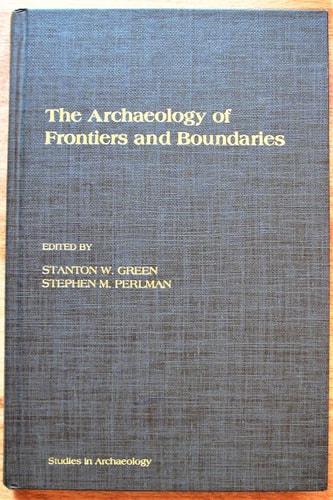
Archaeology of Frontiers & Boundaries
0
0
As an Amazon Associate and affiliate partner, Menrva Books earns from qualifying purchases. Learn more
Author Description
Archaeology of Frontiers and Boundaries presents a diverse set of case studies that addresses the basic questions concerning social change through the study of anthropological archaeology. This book discusses the methodological difficulties of modeling open systems. Organized into three parts encompassing 13 chapters, this book begins with an overview of the partial solution to assess the openness of human systems through the study of frontiers and boundaries. This text then presents a theoretical treatise on forager–farmer interaction using simulation experiments. Other chapters consider the hunter–gatherer settlement patterns as a response to local resource conditions. This book discusses as well the systemic views of cultural change adopted by archaeologists, which emphasize the processes underlying cultural change rather than the structure of the social units undergoing transformations. The final chapter deals with the relationship between behavior and modern material culture on the one hand, and variables of socioeconomic class and ethnicity on the other. This book is a valuable resource for archaeologists and anthropologists.
Menrva's Summary
THE THESIS
This book investigates the fundamental questions of social change by examining frontiers and boundaries through anthropological archaeology. It addresses the methodological challenges of modeling open systems and presents diverse case studies. The work begins with an overview of assessing the openness of human systems via frontiers and boundaries, then moves to a theoretical treatise on forager-farmer interaction using simulation experiments. Subsequent chapters explore hunter-gatherer settlement patterns as a response to local resources and the systemic views of cultural change emphasizing underlying processes.
THE SCOPE MAP
- Overview of assessing the openness of human systems through the study of frontiers and boundaries.
- Theoretical treatise on forager-farmer interaction using simulation experiments.
- Hunter-gatherer settlement patterns as a response to local resource conditions.
- Systemic views of cultural change emphasizing processes rather than social unit structures.
- Relationship between behavior, modern material culture, and socioeconomic class/ethnicity.
THE AUTHORITY PERSPECTIVE
This book is presented as a valuable resource for archaeologists and anthropologists, offering a diverse set of case studies on social change through anthropological archaeology. The text delves into methodological difficulties in modeling open systems and explores various theoretical frameworks for understanding cultural transformations. Its scope includes forager-farmer interactions, settlement patterns, and the connection between material culture and socioeconomic factors. The organization into three parts and thirteen chapters suggests a comprehensive treatment of its subject matter.
Page Count:
344
Publication Date:
1985-04-11
Publisher:
Academic Press
ISBN-10:
0122987802
ISBN-13:
9780122987809
History
Non-Fiction
Science
Case studies
Archaeology
Social change
Anthropology
Methodology
Ethnicity
Community Tags
Similar Books














