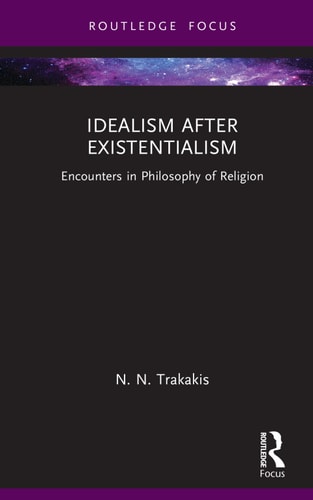
Idealism after Existentialism
0
0
As an Amazon Associate and affiliate partner, Menrva Books earns from qualifying purchases. Learn more
Author Description
A century ago the dominant philosophical outlook was not some form of materialism or naturalism, but idealism. However, this way of thinking about reality fell out of favour in the Anglo-American analytic tradition as well as the Continental schools of the twentieth century. The aim of this book is to restage and reassess the encounter between idealism and contemporary philosophy. The idealist side will be represented by the great figures of the 19th-century post-Kantian tradition in Germany, from Fichte and Schelling to Hegel, followed by the towering Hegelians in Britain led by T. H. Green, F. H. Bradley and Bernard Bosanquet. Their twentieth-century adversaries will be represented by the secular existentialists, especially the famous French trio of Sartre, Beauvoir and Camus, who sought to follow Nietzsche in philosophizing in light of the death of God. And the arena of encounter will be the philosophy of religion—more specifically, questions relating to the nature and existence of God, death and the meaning of life, and the problem of evil. The book argues that the existentialist critique of idealism enables an innovative as well as a more critical and adventurous approach that is sorely needed in philosophy of religion today. Idealism after Existentialism will be of interest to scholars and advanced students working in the history of ninteenth- and twentieth-century philosophy and philosophy of religion.
Menrva's Summary
THE THESIS
This book re-examines the philosophical landscape by staging a confrontation between 19th-century idealism and 20th-century existentialism. It argues that the existentialist critique of idealism offers a vital new perspective for contemporary philosophy of religion. The work traces the lineage of idealism from German post-Kantian thinkers like Fichte and Hegel to British Hegelians such as Green and Bradley. These are then contrasted with French existentialists like Sartre, Beauvoir, and Camus, who grappled with the implications of Nietzsche's 'death of God'. The central arena for this encounter is the philosophy of religion, focusing on core questions about God, life's meaning, death, and the problem of evil.
THE SCOPE MAP
- Exploration of 19th-century German Idealism (Fichte, Schelling, Hegel)
- Analysis of British Hegelianism (T. H. Green, F. H. Bradley, Bernard Bosanquet)
- Examination of 20th-century secular existentialism (Sartre, Beauvoir, Camus)
- Focus on the philosophical implications of Nietzsche's 'death of God'
- Discussion of key themes in the philosophy of religion: nature and existence of God, death, meaning of life, problem of evil
- Argument for the utility of existentialist critiques in modern philosophy of religion
- Target audience: scholars and advanced students of 19th/20th-century philosophy and philosophy of religion
THE AUTHORITY PERSPECTIVE
The book is positioned as a scholarly intervention aimed at advanced students and academics in the fields of 19th and 20th-century philosophy and the philosophy of religion. Its premise suggests a rigorous engagement with complex philosophical traditions, offering a critical reassessment of idealism through the lens of existentialist thought. The focus on core religious and existential questions indicates a potential for deep theoretical exploration. The argument for an 'innovative as well as a more critical and adventurous approach' points to a work intended to stimulate new lines of inquiry within its specialized domain.
Page Count:
336
Publication Date:
2023-03-01
Publisher:
Taylor & Francis
ISBN-10:
1000884155
ISBN-13:
9781000884159
Non-Fiction
Philosophy
Religion
Community Tags
Similar Books