The State and Civil Society: Regulating Interest Groups, Parties, and Public Benefit Organizations in Contemporary Democracies
0
0
As an Amazon Associate and affiliate partner, Menrva Books earns from qualifying purchases. Learn more
Author Description
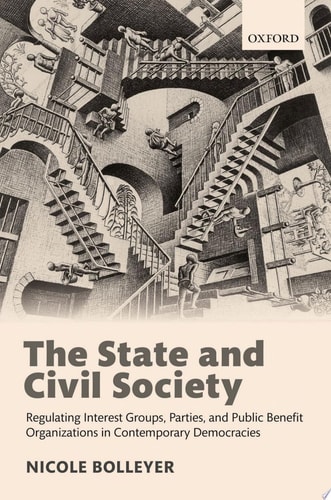
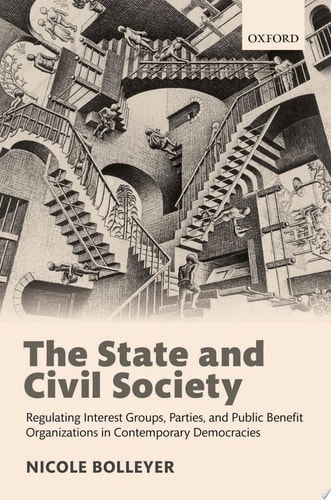
State Regulation Of Civil Society Is Expanding Yet Widely Contested, Often Portrayed As Illegitimate Intrusion. Despite Ongoing Debates About The Nature Of State-voluntary Relations In Various Disciplines, We Know Surprisingly Little About Why Long-lived Democracies Adopt More Or Less Constraining Legal Approaches In This Sphere, In Which State Intervention Is Generally Considered Contentious. Drawing On Insights From Political Science, Sociology, Comparative Law As Well As Public Administration Research, This Book Addresses This Important Question, Conceptually, Theoretically, And Empirically. It Addresses The Conceptual And Methodological Challenges Related To Developing Systematic, Comparative Insights Into The Nature Of Complex Legal Environments Affecting Voluntary Membership Organizations, When Simultaneously Covering A Wide Range Of Democracies And The Regulation Applicable To Different Types Of Voluntary Organizations. Proposing The Analytical Tools To Tackle Those Challenges, It Studies In-depth The Intertwining And Overlapping Legal Environments Of Political Parties, Interest Groups, And Public Benefit Organizations Across 19 Long-lived Democracies. After Presenting An Innovative Interdisciplinary Theoretical Framework Theorizing Democratic States' Legal Disposition Towards, Or Their Disinclination Against, Regulating Voluntary Membership Organizations In A Constraining Or Permissive Fashion, This Framework Is Empirically Tested. Applying Qualitative Comparative Analysis (qca), The Comparative Analysis Identifies Three Main 'paths' Accounting For The Relative Constraints In The Legal Environments Democracies Have Created For Organized Civil Society, Defined By Different Configurations Of Political Systems' Democratic History, Their Legal Family, And Voluntary Sector Traditions-- Why And How To Study Legal Regulation Of Organized Civil Society Comparatively -- How Parties, Interest Groups, And Public Benefit Organizations Are Regulated -- How Democracies Re
Menrva's Summary
THE THESIS
This book investigates why long-lived democracies adopt varying degrees of restrictive or permissive legal frameworks when regulating civil society organizations. Nicole Bolleyer, a scholar in comparative politics and public administration, synthesizes insights from political science, sociology, and law to construct a theoretical framework explaining state-voluntary relations. The work argues that a nation's democratic history, legal traditions, and voluntary sector norms create distinct configurations that dictate how states intervene in the operations of political parties, interest groups, and public benefit organizations.
THE SCOPE MAP
What You Will Find
- A comparative analysis of legal environments across 19 established democracies.
- An interdisciplinary theoretical framework for assessing state regulation of membership organizations.
- Application of Qualitative Comparative Analysis (QCA) to identify causal paths for regulatory outcomes.
Scope Limits
- The study focuses primarily on long-lived democracies and does not extend to authoritarian or transitional regimes.
- The analysis is restricted to the legal regulation of organized civil society rather than informal social movements.
THE AUTHORITY PERSPECTIVE
Scholars in the field of comparative politics recognize this work as a rigorous methodological contribution to the study of state-civil society relations. Readers frequently note the academic density of the prose and the systematic nature of the comparative framework provided.
Page Count:
0
Publication Date:
1900-01-01
Publisher:
Oxford University Press,
ISBN-10:
019181850X
ISBN-13:
9780191818509
Public Administration
Comparative Law
Sociology
Civil society
Democracy
Interest Groups
State The
Community Tags
Similar Books







Reader Comments
Share Your Thoughts
No comments yet. Be the first to share your thoughts!