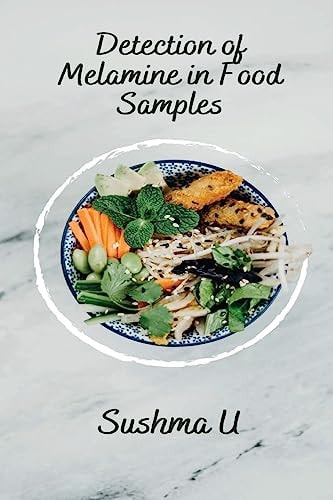
Detection of Melamine in Food Samples
0
0
As an Amazon Associate and affiliate partner, Menrva Books earns from qualifying purchases. Learn more
Author Description
Food is the basic necessity of life. For consumers around the globe, access to secure and nourishing food is afundamental requirement for sustaining their completehealth and welfare. Consequently, food manufacturers make significant investments to ensure the safety of their food products and to diminish the risks to consumers against exposure to contaminatedor unsafe food produce. Producer' sefforts to furnish safe food could cover and influence each aspect of the complete procurement and manufacturing supply chain. The Food borne contaminant/ adulterant problems are major concern to public health and contribute significantly to the outlay of medical management. Synonyms such as admixture and substitution assist in describing the word adulteration. Food adulteration could be described as diminishing the quality of food by deliberate or unintended substitution of food with certain poorer extraneous fragments or by elimination of certain value-added food alternates from the key food item. Food Safety and Standards Authority of India (FSSAI) has described "adulterant" as any substance that is or could be employed for manufacture of the food unsafe or sub-standard or miss-branded or comprising extraneous substance. According to Federal Food, Drug and Cosmetic Act (FFDCA), the primary food safety law administered by the Food and Drug Administration (FDA), food could be stated adulterated if: a) A material is added which is harmful to health. b) Cheaper or lower quality item added to food. c) Any valuable ingredient is isolated from the main food commodity. d) Quality of food is inferior tothe specifications. e) Any constituent has been added to raise bulk or weight. f) To make it appear more valuable.
Menrva's Summary
THE THESIS
This book investigates the critical issue of melamine contamination in food samples and the methods for its detection. It addresses the public health implications of food adulteration and the regulatory frameworks designed to ensure food safety. The work details the chemical properties of melamine and its common adulteration practices, providing a scientific basis for understanding the problem.
THE SCOPE MAP
- Methods for the detection of melamine in various food matrices.
- Discussion of food adulteration as a public health concern.
- Overview of regulatory standards and authorities like FSSAI and FDA.
- Chemical properties and common adulteration techniques involving melamine.
THE AUTHORITY PERSPECTIVE
The subject matter points to a detailed, scientific exploration of food safety protocols and analytical techniques. The focus on specific contaminants like melamine suggests a text aimed at professionals or advanced students in food science, chemistry, or public health. The inclusion of regulatory bodies indicates a practical application of scientific findings within established legal frameworks.
Page Count:
194
Publication Date:
2023-06-25
Publisher:
Self Publish
ISBN-10:
1916706258
ISBN-13:
9781916706255
Non-Fiction
Science
Analytical Chemistry
Food Science
Food Safety
Community Tags
Similar Books