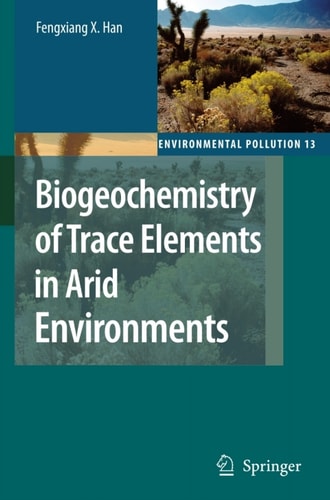
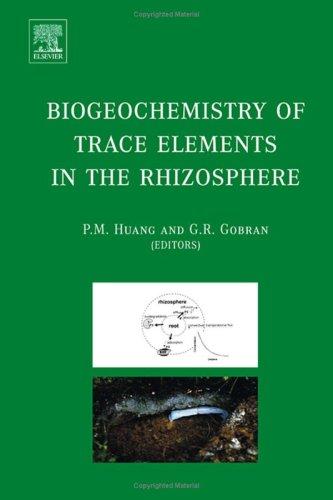
Biogeochemistry of Trace Elements in Arid Environments
0
0
As an Amazon Associate and affiliate partner, Menrva Books earns from qualifying purchases. Learn more
Author Description
Global warming has worsened the water resource crisis in many arid zones worldwide, from Africa to Asia, affecting millions of people and putting them at risk of hunger. Effective management of arid zone resources, including understanding the risks of toxic trace and heavy elements to humans, coupled with the need to produce more food to feed the world’s growing population, has thus become increasingly important. This very timely book, the only one of its kind on the market, fills the gap of our knowledge of trace elements in these regions. This book begins by introducing the nature and properties of arid zone soil, followed by an updated overview and comprehensive coverage of the major aspects of the trace elements and heavy metals of most concern in the world’s arid and semi-arid soils. These aspects include: content and distribution solution chemistry solid-phase chemistry selective sequential dissolution techniques transfer fluxes bioavailability pollution and remediation In order to illustrate the themes, a comprehensive and focused case study on transfer fluxes of trace elements in Israeli arid soils is presented. Finally it closes with the global perspectives on anthropogenic interferences in the natural trace elements’ distribution. This book will be an excellent reference tool for students and professionals in environmental, ecological, agricultural and geological sciences.
Menrva's Summary
THE THESIS
This book addresses the critical need to understand the biogeochemistry of trace elements in arid environments, particularly in the context of global warming and increasing water scarcity. It examines the nature and properties of arid zone soil, providing a comprehensive overview of major trace elements and heavy metals of concern in these regions, including their content, distribution, solution chemistry, solid-phase chemistry, transfer fluxes, bioavailability, and pollution. The work aims to equip environmental, ecological, agricultural, and geological scientists with essential knowledge for managing arid zone resources and mitigating risks associated with toxic elements.
THE SCOPE MAP
- An updated overview and comprehensive coverage of major trace elements and heavy metals in arid and semi-arid soils.
- Detailed discussion of content and distribution, solution chemistry, and solid-phase chemistry of trace elements.
- Explanation of selective sequential dissolution techniques and transfer fluxes.
- Analysis of bioavailability, pollution, and remediation strategies for trace elements.
- A focused case study on the transfer fluxes of trace elements in Israeli arid soils.
- Global perspectives on anthropogenic interferences in natural trace element distribution.
THE AUTHORITY PERSPECTIVE
This book is positioned as a timely and unique resource, filling a gap in the market for information on trace elements in arid regions. Its comprehensive coverage and detailed examination of various aspects, from soil properties to remediation, make it a valuable reference for students and professionals across environmental, ecological, agricultural, and geological sciences. The inclusion of a specific case study on Israeli arid soils provides practical illustration of the discussed themes.
Page Count:
368
Publication Date:
2010-11-22
Publisher:
Springer Netherlands
ISBN-10:
9048175089
ISBN-13:
9789048175086
Non-Fiction
Science
Soil Science
Geochemistry
Trace elements
Heavy metals