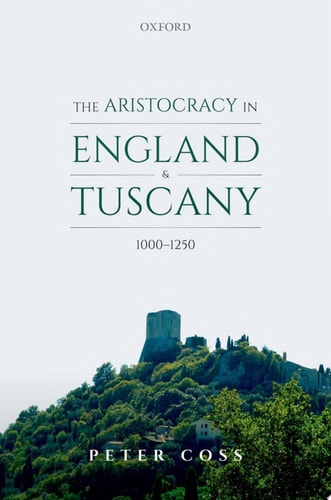
The Aristocracy in England and Tuscany, 1000-1250
0
0
As an Amazon Associate and affiliate partner, Menrva Books earns from qualifying purchases. Learn more
Author Description
Introduction -- Part I: The Tuscan Aristocracy -- The Contextual Framework -- The Aristocracy In City And Contado: Florence And The Florentino -- The Aristocrazia Consolare: Pisa In The Eleventh And Twelfth Centuries (c. 1000-c.1170) -- Beyond The City: The Counts Guidi And Their World -- The Aristocracy Of Southern Tuscany -- Conflict And Stability Within The Tuscan Aristocracy -- From Knighthood To Nobility -- Part Ii: The Aristocracy In England -- The Aristocracy In 'carolingian' England -- The Structure And Articulation Of Aristocratic Society In Anglo-norman England -- At The Apex Of The Aristocracy: The Earls Of Chester As Case Study -- The Nobility And The State In Angevin And Post Angevin England -- Reflections -- Bibliography -- Primary Sources -- Secondary Sources -- Index. Peter Coss. Includes Bibliographical References And Index. Electronic Reproduction. Oxford Available Via World Wide Web.
Menrva's Summary
THE THESIS
This work investigates the comparative development and structural evolution of aristocratic classes in England and Tuscany between the 11th and 13th centuries. Peter R. Coss, a noted historian of medieval social structures, utilizes a comparative framework to analyze how nobility transitioned from localized power bases to integrated components of state formation. By examining the distinct socio-political landscapes of the Italian city-states and the Anglo-Norman monarchy, the text argues that aristocratic identity was shaped by divergent interactions with urban centers and centralized royal authority.
THE SCOPE MAP
What You Will Find
- Comparative analysis of the Tuscan 'aristocrazia consolare' and the Anglo-Norman nobility.
- Examination of the Counts Guidi and the Earls of Chester as specific case studies.
- Analysis of the transition from knighthood to formal nobility.
- Discussion of the relationship between the aristocracy and the state in Angevin England.
Scope Limits
- The study is strictly confined to the period between 1000 and 1250.
- It does not provide an exhaustive history of all European nobility, focusing exclusively on the English and Tuscan examples.
THE AUTHORITY PERSPECTIVE
Scholars frequently cite this text as a significant contribution to comparative medieval social history due to its rigorous methodology. Experts highlight the author's ability to synthesize complex regional data into a coherent framework for understanding aristocratic power dynamics.
Page Count:
0
Publication Date:
1900-01-01
Publisher:
Oxford University Press,
ISBN-10:
0191881910
ISBN-13:
9780191881916
History
European History
Political History
Society
Aristocracy
Social History
Social Class
Community Tags
Similar Books