Czech, German, and Noble: Status and National Identity in Habsburg Bohemia
0
0
As an Amazon Associate and affiliate partner, Menrva Books earns from qualifying purchases. Learn more
Author Description
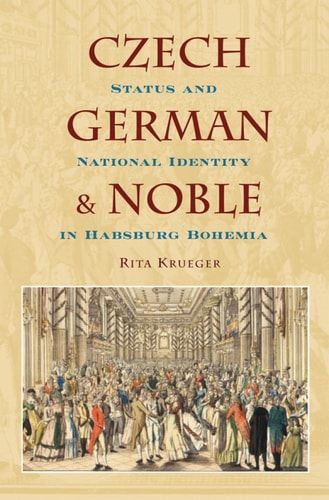
Czech, German, and Noble examines the intellectual ideas and political challenges that inspired patriotic activity among the Bohemian nobility, the infusion of national identity into public and institutional life, and the role of the nobility in crafting and supporting the national ideal within Habsburg Bohemia. Patriotic aristocrats created the visible and public institutional framework that cultivated national sentiment and provided the national movement with a degree of intellectual and social legitimacy. The book argues that the mutating identity of the aristocracy was tied both to insecurity and to a belief in the power of science to address social problems, commitment to the ideals of enlightenment as well as individual and social improvement, and profound confidence that progress was inevitable and that intellectual achievement would save society. The aristocrats who helped create, endow and nationalize institutions were a critical component of the public sphere and necessary for the nationalization of public life overall. The book explores the myriad reasons for aristocratic participation in new or nationalized institutions, the fundamental changes in legal and social status, new ideas about civic responsibility and political participation, and the hope of reform and fear of revolution. The book examines the sociability within and creation of nascent national institutions that incorporated fundamentally new ways of thinking about community, culture, competition, and status. The argument, that class mattered to the degree that it was irrelevant, intersects with several important historical questions beyond theories of nationalism, including debates about modernization and the longevity of aristocratic power, the nature of the public sphere and class, and the measurable impact of science and intellectual movements on social and political life.
Menrva's Summary
THE THESIS
This work investigates how the Bohemian nobility navigated the intersection of class status and emerging national identities within the Habsburg Empire. Rita Krueger, a historian specializing in the cultural and political history of the Habsburg lands, utilizes archival research and institutional records to argue that the aristocracy played a foundational role in legitimizing national movements. She posits that their involvement was driven by Enlightenment ideals, a belief in scientific progress, and a strategic response to the shifting political landscape of the 18th and 19th centuries.
THE SCOPE MAP
What You Will Find
- Analysis of the institutional framework of Bohemian national life
- Examination of the shift from aristocratic privilege to civic responsibility
- Evaluation of the impact of Enlightenment thought on political participation
- Case studies of noble-led scientific and cultural organizations
Scope Limits
- The study focuses primarily on the Bohemian nobility rather than the broader peasant or urban working-class movements
- It does not provide a comprehensive political history of the entire Habsburg Empire, concentrating instead on the Bohemian context
THE AUTHORITY PERSPECTIVE
Historians recognize this text as a significant contribution to the study of nationalism and the persistence of aristocratic power in modernizing societies. Scholars frequently note the academic rigor of the analysis and its success in challenging traditional narratives regarding the decline of the nobility.
Page Count:
304
Publication Date:
2009-01-01
Publisher:
Oxford University Press
ISBN-10:
0190295848
ISBN-13:
9780190295844
History
Aristocracy
Nationalism
Bohemian History
Language And Culture
Social History
Social status
European History
Community Tags
Similar Books