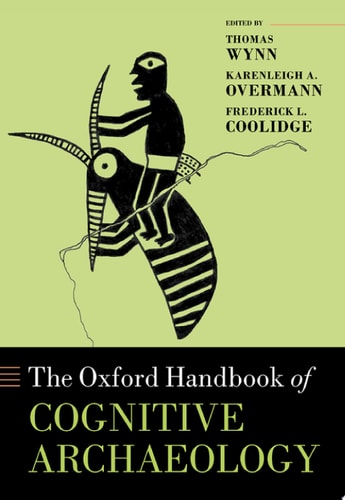
Oxford Handbook of Cognitive Archaeology
0
0
As an Amazon Associate and affiliate partner, Menrva Books earns from qualifying purchases. Learn more
Author Description
The Oxford Handbook Of Cognitive Archaeology Showcases The Theories, Methods, And Accomplishments Of Archaeologists Who Investigate The Human Mind-its Evolutionary Development, Its Ideation, And Its Very Nature-through Material Forms. The Intellectual Heart Of Cognitive Archaeology Is Archaeology, The Discipline That Investigates The Only Direct Evidence Of The Actions And Decisions Of Prehistoric People. Its Theories And Methods Are An Eclectic Mix Of Psychological, Neuroscientific, Paleoneurological, Philosophical, Anthropological, Ethnographic, Comparative, Aesthetic, And Experimental Theories, Methods, And Models, United Only By Their Focus On Cognition. This Volume Encompasses The Wide Spectrum Of The Discipline, Showcasing Contributions From 66 Established And Emerging Scholars From Europe, Africa, Asia, India, The Near East, North America, And Oceania. Significantly, The Majority Of Chapters Deliver Substantive Contributions That Analyze Specific Examples Of Material Culture, From The Oldest Known Stone Tools To Ceramic And Rock Art Traditions Of The Recent Millennium. These Examples Include The Gamut Of Methods And Techniques, Including Typology, Replication Studies, Chaînes Operatoires, Neuroarchaeology, Ethnographic Comparison, And The Direct Historical Approach. The Volume Begins With Retrospective Essays By Several Of The Pioneers Of Cognitive Archaeology, Presents A Broad Range Of State-of-the-art Investigations Into Cognitive Abilities, Tackles Thorny Issues Like The Cognitive Status Of Neandertals, And Concludes With Speculative Essays About The Future Of An Archaeology Of Mind, And Of The Mind Itself-- Provided By Publisher.
Menrva's Summary
THE THESIS
This volume investigates how the human mind, including its evolutionary development and nature, can be reconstructed through the analysis of material culture and archaeological evidence. The editors, Frederick L. Coolidge, Karenleigh A. Overmann, and Thomas Grant Wynn, curate a comprehensive collection of research from 66 international scholars. The text argues that archaeology provides the only direct evidence of prehistoric decision-making, utilizing an interdisciplinary framework that integrates neuroscience, psychology, and anthropology to interpret cognitive evolution.
THE SCOPE MAP
What You Will Find
- Analysis of material culture ranging from early stone tools to recent ceramic and rock art traditions.
- Methodological overviews including neuroarchaeology, replication studies, and the direct historical approach.
- Retrospective essays on the history of the field and speculative projections regarding future research into the archaeology of mind.
Scope Limits
- The volume focuses primarily on cognitive interpretations of material remains and does not provide an exhaustive history of general archaeological theory.
THE AUTHORITY PERSPECTIVE
Experts identify this handbook as a comprehensive reference for the current state of cognitive archaeology, noting its utility for both established researchers and students. Readers frequently highlight the academic density of the prose and the breadth of the global case studies presented.
Page Count:
0
Publication Date:
2024-01-01
Publisher:
New York : Oxford University Press,
ISBN-10:
0191918504
ISBN-13:
9780191918506
Anthropology
Archaeology
Evolutionary Psychology
Prehistory
Community Tags
Other Editions(2)
Similar Books