
The Idiot
0
0
As an Amazon Associate and affiliate partner, Menrva Books earns from qualifying purchases. Learn more
Author Description
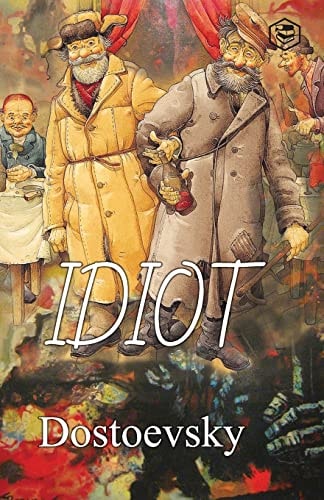
Into A Compellingly Real Portrait Of Nineteenth-century Russian Society, Dostoevsky Introduces His Ideal Hero, The Saintly Prince Myshkin. The Tensions Subsequently Unleashed By The Hero's Innocence, Truthfulness, And Humility Betray The Inadequacy Of His Moral Idealism And Disclose The Spiritual Emptiness Of A Society That Cannot Accommodate Him. Myshkin's Mission Ends In Idiocy And Darkness, But It Is The World That Is Rotten, Not He. Written Under Appalling Personal Circumstances When Dostoevsky Was Travelling In Europe, 'the Idiot' Not Only Reveals The Author's Acute Artistic Sense And Penetrating Psychological Insight, But Also Affords His Most Incisive Indictment Of Russia's Struggling To Emulate Contemporary Europe And Sinking Under The Weight Of Western Materialism.
Menrva's Summary
THE PULSE
Prince Myshkin returns to Russia from a Swiss sanatorium, only to find himself entangled in the volatile social and romantic machinations of the St. Petersburg elite.
Returning to his homeland with a profound sense of compassion and a lack of guile, Myshkin attempts to navigate a society driven by greed, vanity, and social climbing. His presence acts as a catalyst, exposing the hidden motives and moral decay of those around him, particularly in his interactions with the mercurial Nastasya Filippovna and the ambitious Ganya Ivolgin. The narrative follows a third-person perspective that shifts between the internal moral dilemmas of the protagonist and the external social pressures exerted by the aristocratic circles he enters. The world is defined by rigid class structures and the encroaching influence of Western materialism, which constantly tests the limits of Myshkin's saintly nature.
INSIDE THE PAGES
- Extensive use of dialogue to reveal character psychology
- Complex, multi-layered subplots involving inheritance and marriage
- Exploration of the conflict between Christian idealism and secular society
- Frequent use of dramatic, high-stakes social gatherings
- Detailed examination of the concept of the 'positively good man'
- Themes of epilepsy and mental instability as narrative devices
- Sharp social satire directed at the Russian aristocracy
- Non-linear progression of romantic tension and social scandal
THE COLLECTIVE ECHO
Readers frequently highlight the intense psychological depth of the characters, noting how Dostoyevsky uses Myshkin to mirror the flaws of the society surrounding him. Discussion often centers on the tragic trajectory of the protagonist and whether his innocence is a virtue or a liability in a corrupt world. Critics often point to the dense, sometimes chaotic pacing as a deliberate reflection of the social upheaval and moral confusion present in nineteenth-century Russia. Many readers find the exploration of faith and nihilism to be the most compelling aspect of the work, providing a stark contrast to the more conventional social dramas of the era. The novel remains a subject of debate regarding the author's intent to portray a truly 'good' person in a world that inevitably rejects such purity.
Page Count:
659
Publication Date:
1900-01-01
ISBN-10:
0191920657
ISBN-13:
9780191920653
Philosophical
Realism
Russian
Psychological
Classic Literature
Community Tags
Other Editions(9)







Similar Books


Reader Comments
Share Your Thoughts
No comments yet. Be the first to share your thoughts!