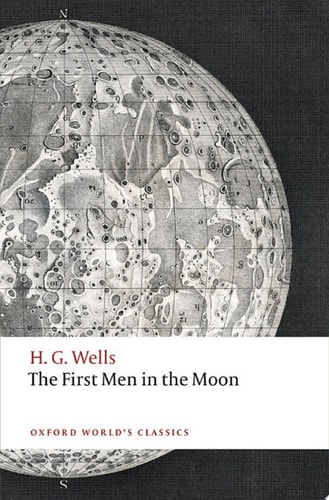
The First Men in the Moon
0
0
As an Amazon Associate and affiliate partner, Menrva Books earns from qualifying purchases. Learn more
Author Description
My next clear recollection is that we were prisoners at we knew not what depth beneath the moon's surface... At the village of Lympne, on the south coast of England, the 'most uneventful place in the world' the failed playwright Mr Bedford meets the brilliant inventor Mr Cavor, and together they invade the moon. Dreaming respectively of scientific renown and of mineral wealth, they fashion a sphere from the gravity-defying substance Cavorite and go where no human has gone before. They expect a dead world, but instead they find lunar plants that grow in a single day, giant moon-calves and the ant-like Selenites, the super-adapted inhabitants of the Moon's utopian society. The First Men in the Moon is both an inspired and imaginative fantasy of space travel and alien life, and a satire of turn-of-the-century Britain and of utopian dreams of a wholly ordered and rational society.
Menrva's Summary
THE PULSE
Two men from Earth construct a gravity-defying vessel and travel to the moon, only to discover a complex, subterranean civilization that challenges their understanding of humanity. Mr. Bedford, a failed playwright seeking financial gain, and Mr. Cavor, an eccentric scientist, collaborate to create a sphere coated in 'Cavorite,' a substance that negates gravitational pull. Their objective is to reach the lunar surface, but they are unprepared for the physical and biological realities of the moon. The narrative is presented through the perspective of Mr. Bedford, who documents their discovery of a hostile, ant-like society known as the Selenites. The story operates within the framework of early speculative fiction, emphasizing the clash between human ambition and alien social structures.
INSIDE THE PAGES
- First-person narrative perspective provided by Mr. Bedford
- Exploration of the 'Cavorite' scientific conceit
- Depiction of a subterranean, hive-like alien society
- Satirical commentary on British social hierarchies
- Contrast between human individualism and Selenite collectivism
- Descriptions of rapid lunar plant growth and giant fauna
- Themes of scientific hubris and unintended consequences
- Philosophical inquiry into the nature of utopian order
THE COLLECTIVE ECHO
Discussion often centers on the contrast between the chaotic, individualistic nature of the human protagonists and the rigid, hyper-specialized society of the Selenites. Readers frequently highlight the effectiveness of Wells's world-building, particularly his ability to render the moon as a vibrant, dangerous ecosystem rather than a barren rock. Critics often point to the book as a significant early example of social satire, noting how the author uses the alien encounter to critique turn-of-the-century British values. The pacing is noted for its shift from a grounded, realistic setting in England to the increasingly surreal and high-stakes environment of the lunar interior. Many readers appreciate the balance between the technical focus on space travel and the broader sociological questions regarding the cost of a perfectly ordered society.
Page Count:
222
Publication Date:
2016-01-01
Publisher:
OUP Oxford
ISBN-10:
0191015083
ISBN-13:
9780191015083
Adventure
Science Fiction
Satire
classic
English & College Success
English
English literature
Community Tags
Other Editions(56)

True Sign Publishing House Private Limited
2023
Default edition
Fox Eye Publishing
2022
Independently Published
2021

Repro India Limited
2021

Independently Published
2021

Independently Published
2020

Independently Published
2019

Independently Published
2019

Amazon Digital Services LLC - KDP Print US
2019

Amazon Digital Services LLC - KDP Print US
2019

Independently Published
2019

Independently Published
2019

Amazon Digital Services LLC - KDP Print US
2019

Independently Published
2019

Independently Published
2019

Independently Published
2019
Independently Published
2019

Independently Published
2019

Independently Published
2019

Independently Published
2019

Independently Published
2019

Amazon Digital Services LLC - KDP Print US
2019

Amazon Digital Services LLC - KDP Print US
2019

Amazon Digital Services LLC - KDP Print US
2019

Amazon Digital Services LLC - KDP Print US
2019

Independently Published
2019

Amazon Digital Services LLC - KDP Print US
2018

Independently Published
2018

Amazon Digital Services LLC - KDP Print US
2018

Amazon Digital Services LLC - KDP Print US
2018

Amazon Digital Services LLC - KDP Print US
2018

Amazon Digital Services LLC - KDP Print US
2018

Amazon Digital Services LLC - KDP Print US
2018

CreateSpace Independent Publishing Platform
2018

CreateSpace Independent Publishing Platform
2018

Amazon Digital Services LLC - KDP Print US
2018

Blurb, Incorporated
2018

Independently Published
2018

Independently Published
2017

CreateSpace Independent Publishing Platform
2017

CreateSpace Independent Publishing Platform
2017

CreateSpace Independent Publishing Platform
2017

CreateSpace Independent Publishing Platform
2017
Read Books Ltd.
2016

Read Books
2016

CreateSpace Independent Publishing Platform
2016

CreateSpace Independent Publishing Platform
2016
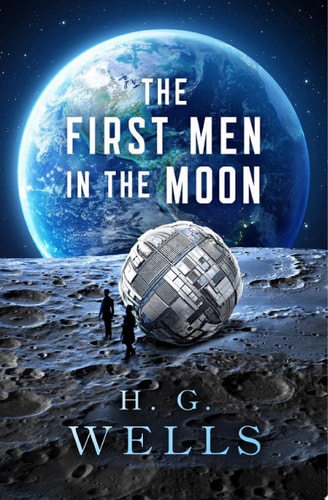
Independent Publishers Group (Chicago Review Press)
2016
OUP Oxford
2016
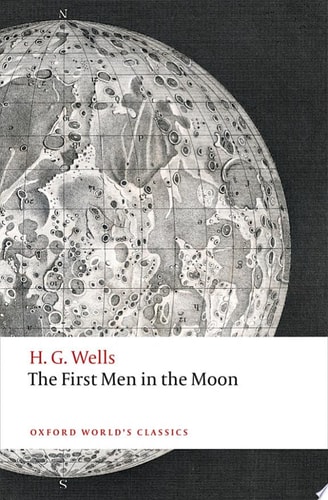
Oxford University Press
2016

CreateSpace Independent Publishing Platform
2015

CreateSpace Independent Publishing Platform
2015

CreateSpace Independent Publishing Platform
2015

CreateSpace Independent Publishing Platform
2013
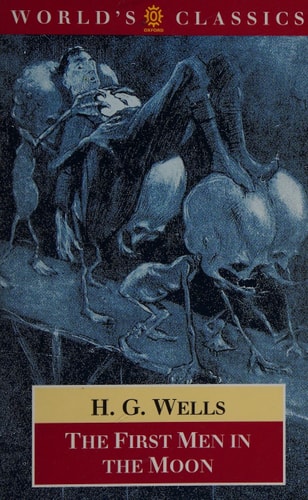
Oxford University Press
1995

Project Gutenberg
1900
Similar Books














Reader Comments
Share Your Thoughts
No comments yet. Be the first to share your thoughts!