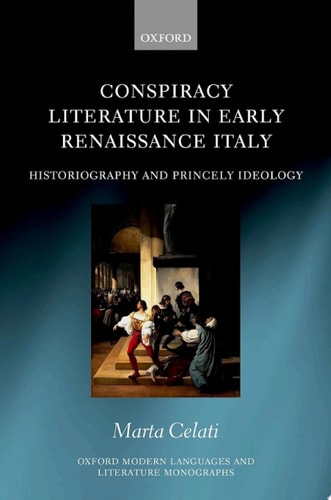
Historical Truth in Fifteenth-Century Italy: Verisimilitude and Factuality in the Humanist Debate
0
0
As an Amazon Associate and affiliate partner, Menrva Books earns from qualifying purchases. Learn more
Author Description
Intro -- Series Page -- Series Page -- Title Page -- Copyright Page -- Dedication Page -- Acknowledgments -- Contents -- Introduction -- Part I Verisimilitude And Historical Truth -- 1. The Brunian Tradition: Political Utility And The Overall Meaning Of History -- 1.1 Impartiality And Utility -- 1.2 Political Utility -- 1.3 Propaganda -- 1.4 Credible Words -- 1.5 Credible Things -- 1.6 Credible Sources -- 2. Facio Vs. Valla: Verisimilitude And Factual Truth -- 2.1 Brevity -- 2.2 Verisimilitude And Dignity -- 2.3 Selectiveness, Omissions, And Praise -- 2.4 Factual Truth 2.5 Truth And Necessity -- 3. Quattrocento Antiquarianism: Exhaustiveness, Factuality, And Criticism -- 3.1 The Fifteenth-century Antiquarian Tradition -- 3.2 Words And Things -- 3.3 Past And Present -- 3.4 The Annalistic Style -- 3.5 History As Catalog -- 3.6 Criticism -- Part Ii Verisimilitude And Historical Criticism -- 4. Humanist Criticism: Verisimilitude And Historical Inquisition -- 4.1 The Judicial Use Of Verisimilitude -- 4.2 The Legal-rhetorical Mentality -- 4.3 Criticism In The Brunian Tradition -- 4.4 Valla And The Legal Tradition -- 4.5 Historical Inquisitio 4.6 Acumen And Truth -- 5. Annius Of Viterbo: Historical Forgery And The Flaws Of Quattrocento Antiquarianism -- 5.1 Annius And Humanist Historiography -- 5.2 Annius' Ideological Aims -- 5.3 Chaldean Truths, Greek Lies -- 5.4 Annius' Antiquarian Masquerade -- 5.5 Annius' Antiquarian Topics -- 5.6 Annius' Dubious Success -- 6. Conclusion: The Rise Of Criticism -- 6.1 Annius' Fall From Favor: The Emergence Of Critical Antiquarianism -- 6.2 Melchor Cano: The Triumph Of Critical Verisimilitude -- 6.3 Verisimilitude And The Many Paths To Historical Criticism -- Bibliography -- Index Giuliano Mori. Also Issued In Print: 2024. Includes Bibliographical References And Index. Electronic Reproduction. Oxford Available Via World Wide Web.
Menrva's Summary
THE THESIS
This work investigates the tension between verisimilitude and factual accuracy in fifteenth-century Italian humanist historiography. Giuliano Mori examines how Renaissance scholars navigated the conflicting demands of rhetorical credibility, political utility, and empirical truth. By analyzing the works of figures such as Bruni, Facio, Valla, and Annius of Viterbo, the author demonstrates how the evolution of historical criticism was deeply rooted in legal and rhetorical traditions.
THE SCOPE MAP
What You Will Find
- Analysis of the Brunian tradition regarding political utility and historical narrative.
- Comparative study of Facio and Valla concerning factual truth versus verisimilitude.
- Examination of Quattrocento antiquarianism and the rise of critical methodologies.
- Case study on Annius of Viterbo and the impact of historical forgery on humanist scholarship.
Scope Limits
- The analysis is strictly confined to the fifteenth-century Italian intellectual context.
- The study does not extend into the broader European historiographical developments beyond the immediate influence of the Italian humanists.
THE AUTHORITY PERSPECTIVE
Scholars in the field of Renaissance intellectual history view this text as a rigorous examination of the methodological shifts in early modern historical writing. Readers frequently note the academic density of the prose and the author's precise engagement with primary humanist sources.
Page Count:
0
Publication Date:
1900-01-01
Publisher:
Oxford University Press,
ISBN-10:
0191994170
ISBN-13:
9780191994173
History
Humanisme
Italian History
Humanism
Historiography
Historiographie
Philosophy history
Civilisation
Community Tags
Similar Books