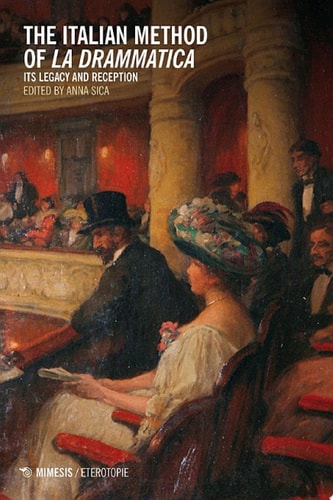
The Italian Method of La drammatica: Its Legacy and Reception
0
0
As an Amazon Associate and affiliate partner, Menrva Books earns from qualifying purchases. Learn more
Author Description
The volume The Italian Method of la drammatica: its Legacy and Reception includes the long and complex investigation to identify the Italian acting-code system of the drammatica used by nineteenth-century Italian actors such as Adelaide Ristori, Giovanni Grasso, Tommaso Salvini, Eleonora Duse. In particular, their acting inspired Stanislavsky who reformedtwentieth-century stage. The declamatory code of the drammatica was composed by symbols for notation of voice and gesture which Italian actors marked in their prompt-books.The discovery of the drammatica’s code sheds new light on nineteenth-century acting. Having deciphered the phonetic symbols of the code, Anna Sica has given birth an investigation with a group of outstanding scholars in an attempt to explore the drammatica’s legacy, and its reception in Europe as well as in Asia. At this stage new evidence has emerged proving that, for instance, the symbol used by the drammatica actors to sign the colorito vocale was known to English actors in the second half of the nineteenth century.By noting how Adelaide Ristori passed on her art to Irving’s actress Genevieve Ward, and how Stanislavsky, almost aflame, moulded his system from Duse’s acting, an unexplored variety in the reception of the drammatica’s legacy is revealed.
Menrva's Summary
THE THESIS
This volume investigates the 'drammatica,' an Italian acting-code system used by 19th-century actors, and its profound influence on 20th-century theatre. The book delves into the notation system of voice and gesture employed by actors like Ristori, Grasso, Salvini, and Duse, which directly inspired Stanislavsky's seminal acting system. Through the deciphering of phonetic symbols by Anna Sica and contributions from other scholars, the work explores the drammatica's legacy and its reception across Europe and Asia, revealing new evidence of its cross-cultural impact.
THE SCOPE MAP
- Analysis of the Italian acting-code system known as 'la drammatica'.
- Identification of symbols for notation of voice and gesture used by 19th-century Italian actors.
- Exploration of the influence of Italian actors such as Adelaide Ristori, Giovanni Grasso, Tommaso Salvini, and Eleonora Duse on Konstantin Stanislavsky.
- Examination of the reception of the drammatica's legacy in Europe and Asia.
- Evidence of the transmission of acting techniques, such as the symbol for 'colorito vocale,' to English actors.
- Case studies on the artistic lineage from Ristori to Irving's actress Genevieve Ward.
- Discussion of how Stanislavsky adapted elements from Duse's acting for his own system.
THE AUTHORITY PERSPECTIVE
The book offers a detailed scholarly examination of a specific, influential acting methodology. Its focus on the 'drammatica' and its connection to Stanislavsky's system suggests a work of interest to theatre historians and practitioners. The research presented aims to shed new light on 19th-century acting practices and their global reception. The inclusion of contributions from various scholars indicates a comprehensive approach to the subject matter.
Page Count:
256
Publication Date:
2015-01-01
Publisher:
Mimesis
ISBN-10:
8857529304
ISBN-13:
9788857529301
History
Non-Fiction
Theatre History
European History
Performance Studies
Acting
Community Tags
Similar Books