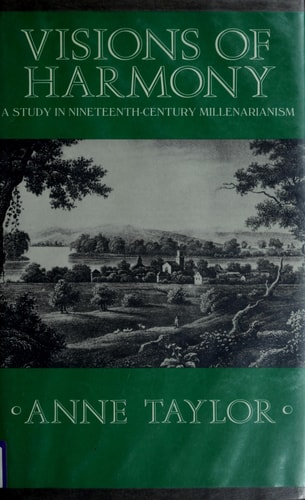
Visions of Harmony: A Study in Nineteenth-Century Millenarianism
0
0
As an Amazon Associate and affiliate partner, Menrva Books earns from qualifying purchases. Learn more
Author Description
This book tells the tale of a small town on the Wabash River that became the site of more than one attempt to bring about the millennium. In 1814 George Rapp, a religious leader from Wurttemberg, transferred a thousand of his followers to an uncleared site in a dense forest. The settlers called it Harmonie, and there they patiently awaited the Second Coming of the Lord. Ten years later Harmonie was sold to Robert Owen of New Lanark, who started to erect one of his Villages of Unity and Mutual Co-operation with the goal of bringing about the New Moral World. As attractive as New Harmony was to many, isolation, lack of foresight, and Owen's personal peculiarities eventually led to its collapse; but the curious story of the settlement is now preserved, offering unusual insight into religious fundamentalism, millenarian experimentalists, and 19th-century American history.
Menrva's Summary
THE THESIS
This book investigates the socio-religious motivations and practical failures of two distinct utopian experiments established in a small town on the Wabash River during the nineteenth century. Anne Taylor examines the transition of the settlement from George Rapp’s millenarian community to Robert Owen’s secular socialist experiment. By analyzing the primary source records of these groups, the author argues that ideological rigidity and isolation were the primary catalysts for the eventual dissolution of both projects.
THE SCOPE MAP
What You Will Find
- Historical analysis of the Rappite religious migration from Wurttemberg to Indiana.
- Examination of Robert Owen’s 'New Moral World' socialist framework.
- Comparative study of religious fundamentalism versus secular utopianism.
- Documentation of the logistical and social challenges faced by frontier experimental communities.
Scope Limits
- The text does not provide a comprehensive biography of George Rapp or Robert Owen beyond their roles in the Wabash settlement.
- It does not extend its analysis to modern-day utopian movements or contemporary communal living.
THE AUTHORITY PERSPECTIVE
Historians frequently cite this work as a balanced account of the intersection between religious fervor and social reform in early American history. Scholars note the clarity of the prose and the author's ability to contextualize localized events within broader nineteenth-century intellectual trends.
Page Count:
360
Publication Date:
1987-03-05
Publisher:
Oxford University Press
ISBN-10:
0192117939
ISBN-13:
9780192117939
History
American History
Indiana_history
Nineteenth century
Millennialism
Social History
Community Tags
Similar Books