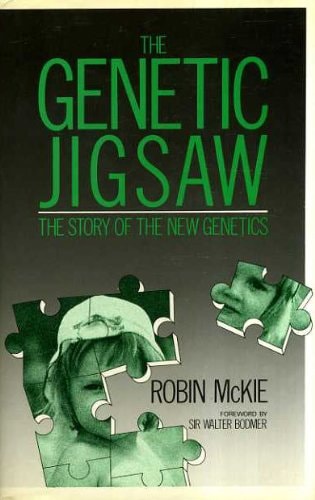
The Genetic Jigsaw: The Story of the New Genetics
0
0
As an Amazon Associate and affiliate partner, Menrva Books earns from qualifying purchases. Learn more
Author Description
What is genetic disease? Can it be cured? How does it occur? How can the risks be reduced? What promises does the future hold? In this book, Robin McKie guides the reader through one of the most complex and exciting subjects of current research, the study of genetically transmitted diseases. McKie investigates the dramatic advances in diagnosis and gene therapy, gene splicing and cloning, the design of special drugs, and DNA fingerprinting, and discusses the ethical problems that arise from this rapidly expanding area of research. He addresses such issues as: Will widespread genetic screening lead to unfair discrimination? How do we define handicap? And if we start `designing' our babies, what will we design? Written for the layperson, this book will be of interest to anyone coping with genetically inherited disease or wishing to learn more about genetic engineering.
Menrva's Summary
THE THESIS
This book investigates the fundamental mechanisms of genetic disease and the ethical implications surrounding the rapid advancement of genetic engineering technologies. Robin McKie, a science journalist, synthesizes complex biological research into an accessible format for the general public. He examines the intersection of medical progress and societal responsibility, questioning how humanity should navigate the power to manipulate the human genome.
THE SCOPE MAP
What You Will Find
- Explanations of genetic transmission and the mechanics of inherited diseases
- Overviews of gene therapy, cloning, and DNA fingerprinting techniques
- Analysis of the ethical dilemmas regarding genetic screening and designer babies
Scope Limits
- The text does not provide clinical medical advice for specific patient cases
- It does not cover the most recent post-1990s developments in CRISPR or modern genomic sequencing
THE AUTHORITY PERSPECTIVE
Experts recognize this work as a clear, introductory primer for laypeople interested in the social and scientific landscape of early genetic research. Readers frequently note that while the science is dated, the ethical questions posed remain relevant to contemporary discussions on biotechnology.
Page Count:
176
Publication Date:
1988-11-17
Publisher:
Oxford University Press
ISBN-10:
019212272X
ISBN-13:
9780192122728
Science
Biotechnology
Biology
Medical
Genetics
Ethics
Community Tags
Similar Books