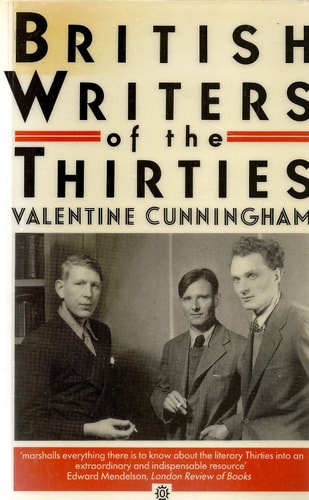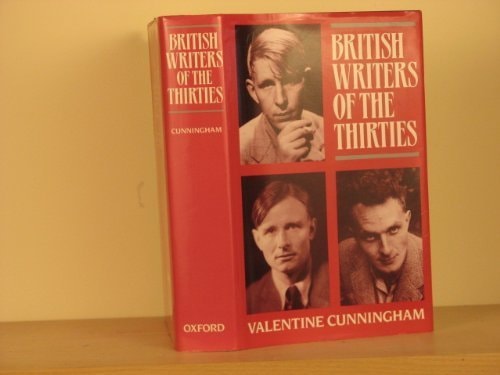
British Writers of the Thirties
0
0
As an Amazon Associate and affiliate partner, Menrva Books earns from qualifying purchases. Learn more
Author Description
This wide-ranging study of British writers of the 1930s examines the masterpieces of that momentous decade, not in linguistic isolation, but in the contexts--social, political, historical, ideological, and personal--in which they were composed. Cunningham maps out the dominant images and concerns, nothing less than the central obsessions and imposing images of the '30s imagination. He analyzes the obsession with violence, the "destructive element" of post-World War consciousness; the cult of youth, of schools and schoolmasters; the infatuation with heroes--flyers, mountaineers, and racing car drivers--and the related concern about "being small," weak, or neurotic in an age of mass politics. In order to illustrate this kaleidoscope of themes, Cunningham examines not only the canonical texts, but also "minor" forms and writings, including detective stories, films, and popular songs, showing how these neglected genres also illuminate the work of this period.
Menrva's Summary
THE THESIS
This study investigates how the social, political, and ideological contexts of the 1930s shaped the literary output of British writers during that decade. Valentine Cunningham, a scholar of twentieth-century literature, utilizes a broad range of primary sources to argue that the era's literature cannot be understood in isolation from its historical anxieties. He posits that the decade's preoccupation with violence, youth, and heroism reflects a collective consciousness grappling with the aftermath of the Great War and the rise of mass politics.
THE SCOPE MAP
What You Will Find
- Analysis of canonical literary texts alongside popular culture artifacts like films and songs.
- Examination of recurring thematic obsessions including the cult of youth and the fascination with heroic figures.
- A contextual framework linking literary production to the political and social climate of the 1930s.
Scope Limits
- The study focuses specifically on British writers and does not provide an exhaustive survey of international literature from the same period.
THE AUTHORITY PERSPECTIVE
Scholars and critics frequently cite this work as a comprehensive resource for understanding the cultural landscape of interwar Britain. Readers often note the academic density of the prose and the breadth of the author's research across both high and low culture.
Page Count:
544
Publication Date:
1988-03-10
Publisher:
Oxford University Press
ISBN-10:
0192122673
ISBN-13:
9780192122674
History
1930s
Literary Criticism
Authors english
British literature