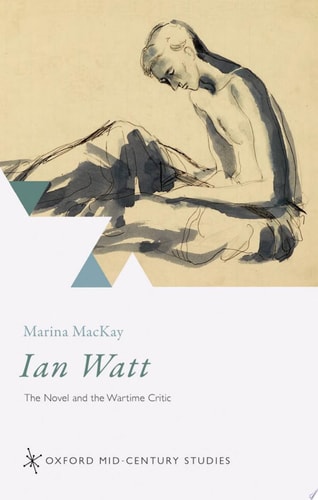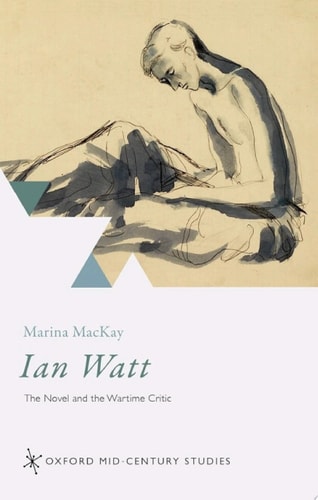
Ian Watt: The Novel and the Wartime Critic
0
0
As an Amazon Associate and affiliate partner, Menrva Books earns from qualifying purchases. Learn more
Author Description
Before his masterpiece The Rise of the Novel made him one of the most influential post-war British literary critics, Ian Watt was a soldier, a prisoner of war of the Japanese, and a forced labourer on the notorious Burma-Thailand Railway. Both an intellectual biography and an intellectual history of the mid-century, this book reconstructs Watt's wartime world: these were harrowing years of mass death, deprivation, and terror, but also ones in which communities and institutions were improvised under the starkest of emergency conditions. Ian Watt: The Novel and the Wartime Critic argues that many of our foundational stories about the novel—about the novel's origins and development, and about the social, moral, and psychological work that the novel accomplishes—can be traced to the crises of the Second World War and its aftermath.
Menrva's Summary
THE THESIS
This book investigates how the wartime experiences of Ian Watt, specifically his time as a prisoner of war, fundamentally shaped his influential theories on the development of the novel. Author Marina Mackay, a scholar of mid-century literature, utilizes archival research and biographical analysis to argue that the crises of the Second World War provided the intellectual framework for Watt's seminal work. She posits that the social and moral questions Watt explored in his criticism were direct responses to the extreme conditions he witnessed and endured during his captivity.
THE SCOPE MAP
What You Will Find
- An intellectual biography of Ian Watt focusing on his transition from soldier to literary critic.
- An analysis of the Burma-Thailand Railway as a site of improvised social and institutional structures.
- A critical examination of how wartime trauma informs literary theory regarding the novel's origins.
Scope Limits
- The text does not provide a comprehensive military history of the Burma-Thailand Railway.
- It does not offer a general survey of all post-war British literary criticism outside of Watt's specific influence.
THE AUTHORITY PERSPECTIVE
Scholars recognize this work as a significant contribution to the study of mid-century intellectual history and the intersection of biography with literary theory. Readers frequently note the academic density of the prose and the depth of the historical context provided by the author.
Page Count:
236
Publication Date:
2018-01-01
Publisher:
OUP Oxford
ISBN-10:
019255851X
ISBN-13:
9780192558510
History
Biography
Intellectual History
World War
British literature
Indigenous
Literary Criticism