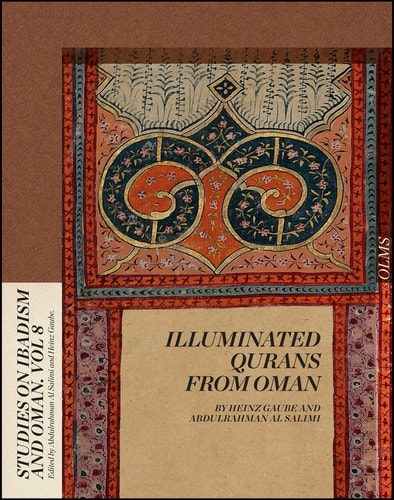
Illuminated Qurans from Oman
0
0
As an Amazon Associate and affiliate partner, Menrva Books earns from qualifying purchases. Learn more
Author Description
This book is a first attempt to present Omani Quranic manuscripts and their illuminations to a wider public and to discuss their originality in the wider context of Quranic manuscripts, Islamic art as a whole, and beyond that in the wider context of Oriental art in general. The art of Quran illumination developed slowly. The main reason for this lengthy process can be seen in the fear of allowing anything to intrude upon the text, which in itself differs highly from the holy texts of other religions. For a Muslim the Quran is the word of God revealed to mankind. It constitutes a kind of Divine presence. This Divine presence had theoretically to be the only source of inspiration for the artists who wrote, illuminated, and embellished the Quranic text. It cannot be "polluted" with pictures of Holy figures, special events, or so on. In which way do these specific preconditions and other criteria influence Quran illumination? In first place we have to take into consideration that the artists who illuminated Qurans came from different ethnic, artistic, and historic backgrounds which nurtured what became a specific Islamic civilization and a specific Islamic art. And, next to the uniqueness of the text, these backgrounds were the sources of the formation and development of Quran illuminations as we can follow them up chronologically and regionally. These sources were primary Arabic and Persian: Arabic, an essentially iconoclastic or abstract concept of material representation of religious themes and ideas, and Persian, which had its origins in the Ancient Oriental and Mediterranean world of pictorial representation of religious themes and ideas. This book focuses on the most prominent components of Quran illuminations, the frontispieces. The organization of the material starts with the most unpretentiously designed, plain frontispieces without frames and without horizontally subdivided pages and ends with one-page or double-page frontispieces with illuminations in two wel
Menrva's Summary
THE THESIS
This book presents Omani Quranic manuscripts and their illuminations, exploring their originality within the broader context of Islamic and Oriental art. The text delves into the unique development of Quranic illumination, influenced by the sacred nature of the Quran and the artists' diverse ethnic, artistic, and historical backgrounds. It examines how Arabic traditions, with their abstract representation of religious themes, and Persian influences, drawing from ancient pictorial traditions, shaped this art form. The book specifically focuses on the prominent component of Quran illuminations: the frontispieces, tracing their evolution from simple designs to elaborate one-page or double-page compositions.
THE SCOPE MAP
- Presentation of Omani Quranic manuscripts and their illuminations.
- Discussion of the originality of Omani illuminations within global Quranic manuscript traditions.
- Analysis of the development of Quranic illumination art.
- Exploration of the influence of the Quran's sacred status on artistic choices.
- Examination of the impact of diverse ethnic, artistic, and historical backgrounds on illumination styles.
- Comparison of Arabic (abstract) and Persian (pictorial) influences on Islamic art.
- Focus on the prominent role and evolution of frontispieces in Quranic illuminations.
- Chronological and regional tracing of the formation and development of Quran illuminations.
THE AUTHORITY PERSPECTIVE
This book offers a foundational exploration of Omani Quranic manuscripts, aiming to introduce their intricate illuminations to a wider audience. The work contextualizes these manuscripts within the broader history of Islamic art and Oriental art, highlighting the unique artistic and religious considerations that shaped their creation. It addresses the development of Quranic illumination, emphasizing the interplay between the sacred text and the diverse cultural influences of the artists. The focus on frontispieces provides a specific lens through which to understand the chronological and regional evolution of this art form.
Page Count:
221
Publication Date:
2016-01-01
Publisher:
Georg Olms Verlag
ISBN-10:
3487153890
ISBN-13:
9783487153896
Art
Non-Fiction
History
Islamic Art
Manuscripts
Art History
Community Tags
Similar Books















Reader Comments
Share Your Thoughts
No comments yet. Be the first to share your thoughts!