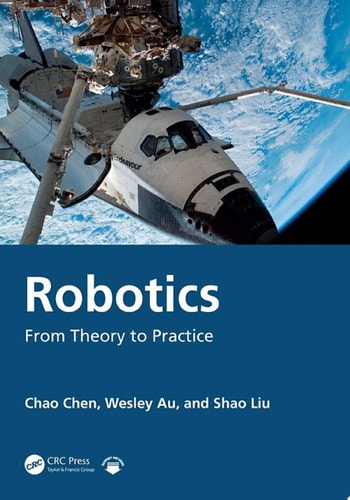
Robotics: From Theory to Practice
0
0
As an Amazon Associate and affiliate partner, Menrva Books earns from qualifying purchases. Learn more
Author Description
Robotics: From Theory to Practice introduces robotic theories and technologies to audiences, including university students, professionals with engineering backgrounds, and even high-school students interested in building their own robots. We aim to bridge the gap between classic theories and real-world applications of robotic manipulators, which, to date, have far exceeded the domain of conventional industry. The contents are divided into three parts. The first two cover classic theories of robotics, including kinematics, dynamics, path planning, control, and programming. Specifically, Part I is an introduction targeting junior students, featuring more simplistic topics and examples. Part II provides the senior students and professionals with more in-depth discussions on critical topics and more comprehensive examples. In Part III, we demonstrate how classic robotics theory can be extended to more advanced theoretical frameworks and adopted in real-world applications beyond conventional industries. This textbook is valuable to broad readers, including those who have limited background in general engineering and wish to explore non-conventional applications of robotic manipulators. The scaffolded contents from Part I to Part III are created to lower the prerequisites and smooth the learning curve.
Menrva's Summary
THE THESIS
This textbook bridges the gap between classic robotic theories and their real-world applications, extending beyond conventional industries. The book is structured into three parts, beginning with foundational theories of robotics including kinematics, dynamics, path planning, control, and programming. Part I is designed for junior students with simpler topics and examples, while Part II delves deeper for senior students and professionals with more comprehensive discussions. Part III explores advanced theoretical frameworks and applications in non-conventional domains, making it valuable for readers with limited engineering backgrounds.
THE SCOPE MAP
- Classic theories of robotics: kinematics, dynamics, path planning, control, and programming.
- Scaffolded content progression from introductory (Part I) to advanced (Part II & III).
- Real-world applications of robotic manipulators beyond conventional industries.
- Examples tailored for university students and engineering professionals.
THE AUTHORITY PERSPECTIVE
The book is structured to accommodate a wide range of readers, from university students to professionals and even interested high-school students. Its scaffolded approach aims to lower prerequisites and smooth the learning curve for complex topics. The content is designed to be valuable for those exploring non-conventional applications of robotic manipulators, suggesting a focus on practical implementation and broader accessibility.
Page Count:
458
Publication Date:
2025-06-30
Publisher:
Taylor & Francis
ISBN-10:
1040365353
ISBN-13:
9781040365359
Science
Non-Fiction
Engineering
Robotics
textbook
Applied Science
Community Tags
Similar Books