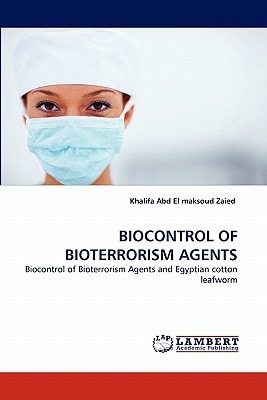
Biocontrol of Bioterrorism Agents
0
0
As an Amazon Associate and affiliate partner, Menrva Books earns from qualifying purchases. Learn more
Author Description
Shorttitle Biological terrorism has become more immediate and concern about new strains of pathogens has increased in the world. Human exposure to these agents may occur through inhalation, skin (cutaneous) exposure, or ingestion of contaminated food or water. Biological warfare agents may persist in the environment and cause problems some time after their release.The agents below fall into four major groups, three classes of microorganisms - bacteria, rickettsia, and viruses, plus bacterial toxins, which are poisonous chemicals produced by bacteria. The important diseases resulted from bioterrorism taken in this presentation which including anthrax, plague, Cholera, smallpox and Influenza. The world need increased training and education of health care professionals on how to prevent and treat biological warfare casualties. The potency of Bacillus preparation was determined against Spodoptera littoralis. Recombinant crystalline protein and endospores from bacterial transconjugants were highly toxic against S. littoralis than from their parental strains.
Menrva's Summary
THE THESIS
This book investigates the potential of biological control methods to combat bioterrorism agents. The author, Khalifa Abd El Maksoud Zaied, addresses the growing global concern over new pathogen strains and their immediate threat. It details how exposure can occur through inhalation, skin contact, or ingestion, and notes the environmental persistence of these agents. The work categorizes agents into bacteria, rickettsia, viruses, and bacterial toxins, focusing on diseases like anthrax, plague, cholera, smallpox, and influenza, while also presenting research on the efficacy of bacterial preparations against insect pests.
THE SCOPE MAP
- Analysis of biological terrorism threats and emerging pathogen concerns.
- Discussion of exposure routes: inhalation, cutaneous, and ingestion.
- Categorization of biological warfare agents: bacteria, rickettsia, viruses, and toxins.
- Focus on key diseases: anthrax, plague, cholera, smallpox, and influenza.
- Exploration of environmental persistence of biological agents.
- Research findings on the potency of Bacillus preparations against Spodoptera littoralis.
- Comparison of recombinant crystalline protein and endospores from bacterial transconjugants versus parental strains.
THE AUTHORITY PERSPECTIVE
The book addresses the critical and evolving threat of bioterrorism, highlighting the need for enhanced preparedness and treatment strategies among healthcare professionals. It presents a scientific approach to understanding and potentially mitigating the impact of biological agents. The research included on bacterial preparations against insect pests suggests an exploration into novel biocontrol applications beyond direct human threat mitigation. The work aims to inform and educate on the multifaceted nature of biological threats and their control.
Page Count:
72
Publication Date:
2010-10-01
Publisher:
Lap Lambert Academic Publishing GmbH KG
ISBN-10:
3843368392
ISBN-13:
9783843368391
Science
Non-Fiction
Biology
Biotechnology
Public Health
Community Tags
Similar Books