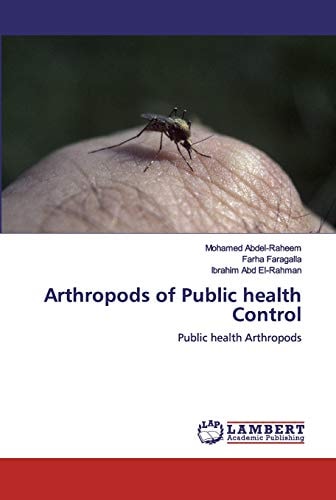
Arthropods of Public Health Control
0
0
As an Amazon Associate and affiliate partner, Menrva Books earns from qualifying purchases. Learn more
Author Description
Arthropods are probably the most successful of all animals. They are found in every type of habitat and in all regions of the world. They feed on a wide variety of plant and animal materials and have been known as major causes of disease for centuries. Insects are referred to in the Bible as well as in Chinese, Greek, Roman and other historical writings. Insect-transmitted diseases have killed more soldiers than all military actions combined. Fleas, lice and mosquitoes infect humans and domesticated animals directly or indirectly with the organisms of many dangerous diseases. Arthropod stings or bites are occasionally fatal to humans. Their germ-laden saliva or contaminated bodies also are potential sources of disease transmission. Arthropods, especially insects, are vital players in the transmission of certain diseases to humans.
Menrva's Summary
THE THESIS
Arthropods represent a dominant and pervasive force in global ecosystems, posing significant challenges to public health through disease transmission. The book details the unparalleled success of arthropods across diverse habitats worldwide, highlighting their historical impact on human health and military conflicts. It examines how insects, fleas, lice, and mosquitoes directly and indirectly transmit dangerous diseases, and how their bites, stings, or contaminated bodies can be fatal or serve as vectors for pathogens, underscoring their critical role in public health concerns.
THE SCOPE MAP
- The ecological dominance and adaptability of arthropods globally.
- Historical accounts of arthropod-borne diseases and their impact on human populations, including military history.
- Specific examples of disease transmission by insects, fleas, lice, and mosquitoes.
- Mechanisms of disease transmission via arthropod bites, stings, and contamination.
- The direct and indirect roles of arthropods in causing significant human diseases.
- The potential for arthropod stings or bites to be fatal.
THE AUTHORITY PERSPECTIVE
The book addresses the critical role of arthropods in public health, focusing on their capacity for disease transmission. It draws upon historical records and biological facts to illustrate the significant impact these creatures have had on human health and survival throughout history. The text emphasizes the mechanisms by which arthropods spread pathogens, highlighting their importance in understanding and controlling infectious diseases. This work serves as a foundational text for understanding the complex relationship between arthropods and human well-being.
Page Count:
184
Publication Date:
2019-05-22
Publisher:
LAP Lambert Academic Publishing
ISBN-10:
6200095493
ISBN-13:
9786200095497
Science
Non-Fiction
Entomology
Insects
Public Health
Community Tags
Similar Books